Why Is My Stir Fry Watery? Easy Fix Guide
Watery stir fry frustrates many home cooks. You chop the veggies, heat the pan, and toss them in with care, only to watch a puddle form. The crisp fry you wanted turns soft, and the sauce stays thin.
Most pans turn watery for three simple reasons. The veggies stay wet, the pan stays cool, or the cook crowds the wok. Each one traps steam, so the food simmers instead of searing.
This guide walks through each cause in order, then gives a simple fix for it. Follow the steps, and your next pan should stay crisp and glossy. And if your curry also turns too hot, see why too spicy curry happens and how to fix it with simple kitchen tricks.
Why the Pan Turns Watery
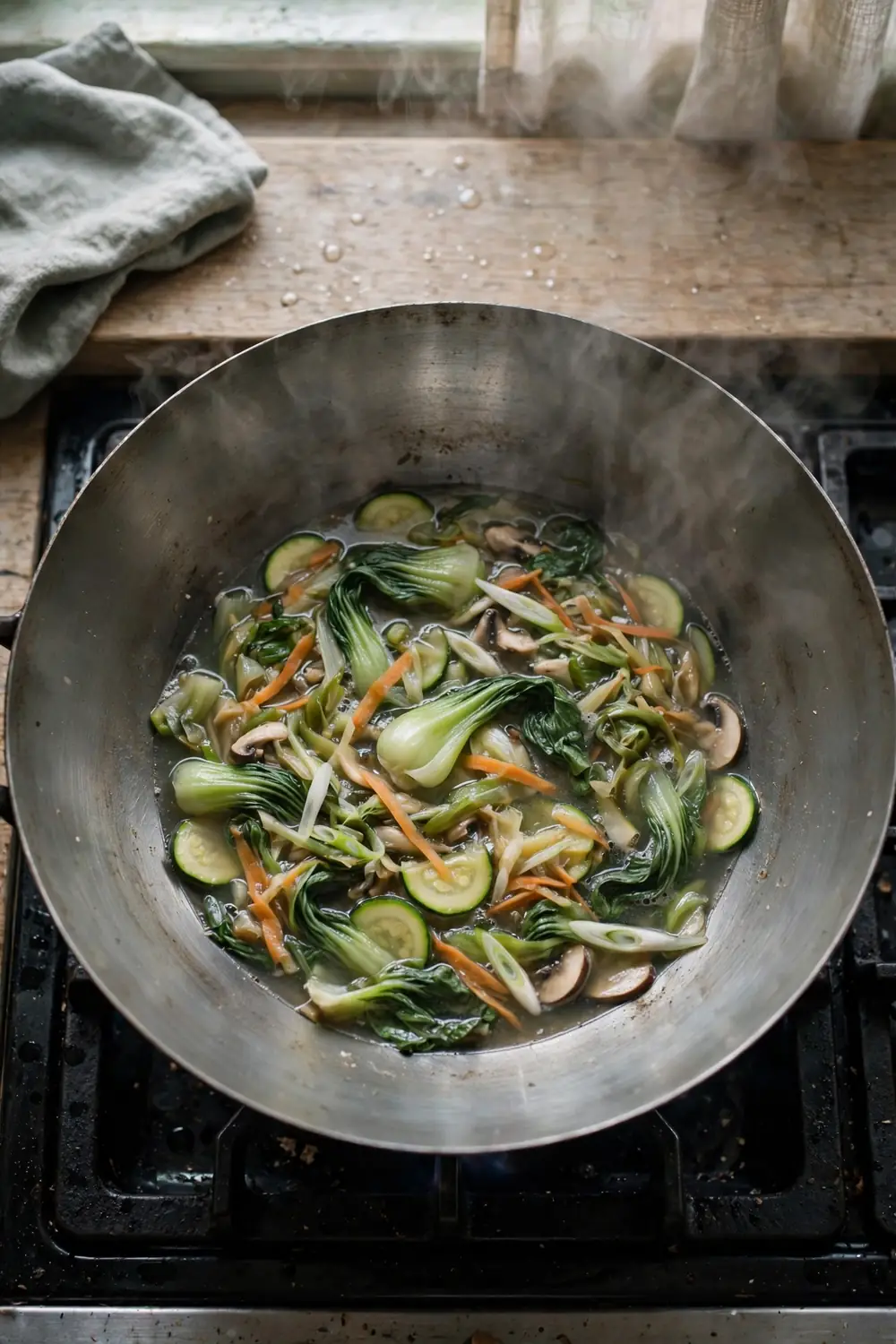
The pan turns watery when moisture floods it faster than heat can drive it off. Wet veggies, a cool pan, and a crowded wok all feed the puddle. The food sits in liquid instead of searing, and the sauce thins out. Once you see why the puddle forms, each fix makes sense.
A wet pan does not mean dinner is ruined. The soggy veggies still taste fine, and the sauce thickens with the right method. Fix the method before you cook the next batch, and the fry stays crisp. A hot pan keeps the fry crisp.
Preheat the Pan Hot
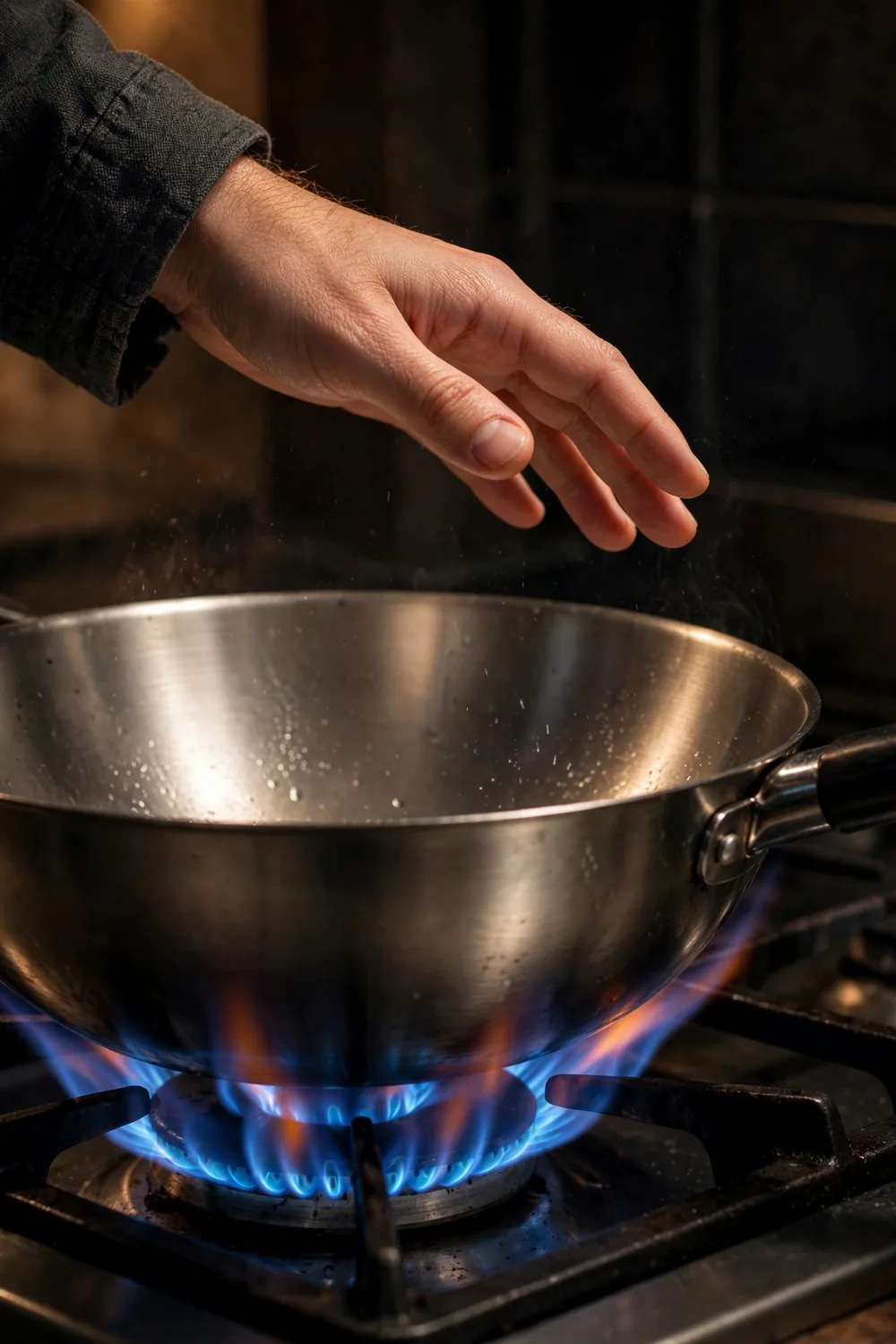
A hot pan seals the veggies on contact, and a cool pan lets them sweat. Heat the empty wok over high heat until a drop of water sizzles and vanishes. A cool start pulls juice from the veggies, and the pan turns soupy.
- Set the empty wok over high heat for two minutes.
- Flick in a drop of water, and wait for a fast sizzle.
- Hold your hand above the pan and feel strong heat.
- Add oil only after the pan feels fully hot.
Use High Heat
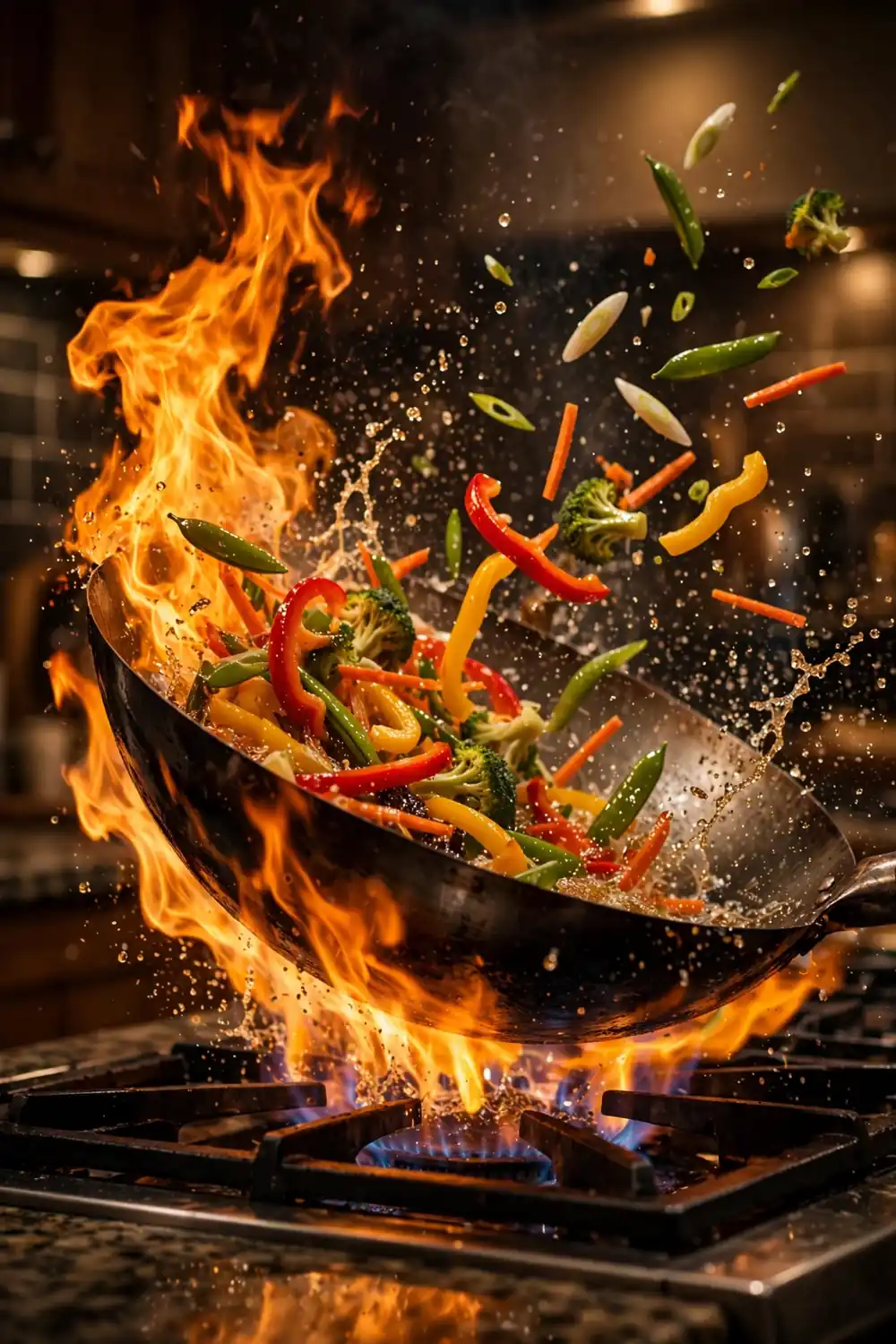
Quick Tip: Keep the burner at full blast while the fry cooks. High heat drives water off fast, so the veggies brown instead of stewing in their own juice.
Low heat simmers the veggies in their own juice, and the pan turns soupy. Hot air keeps the fry crisp, and the sauce stays thick. Keep the lid off while the fry cooks, and trust the heat only after a full preheat. A fully hot wok sears even, and the texture turns crisp.
Dry the Veggies First
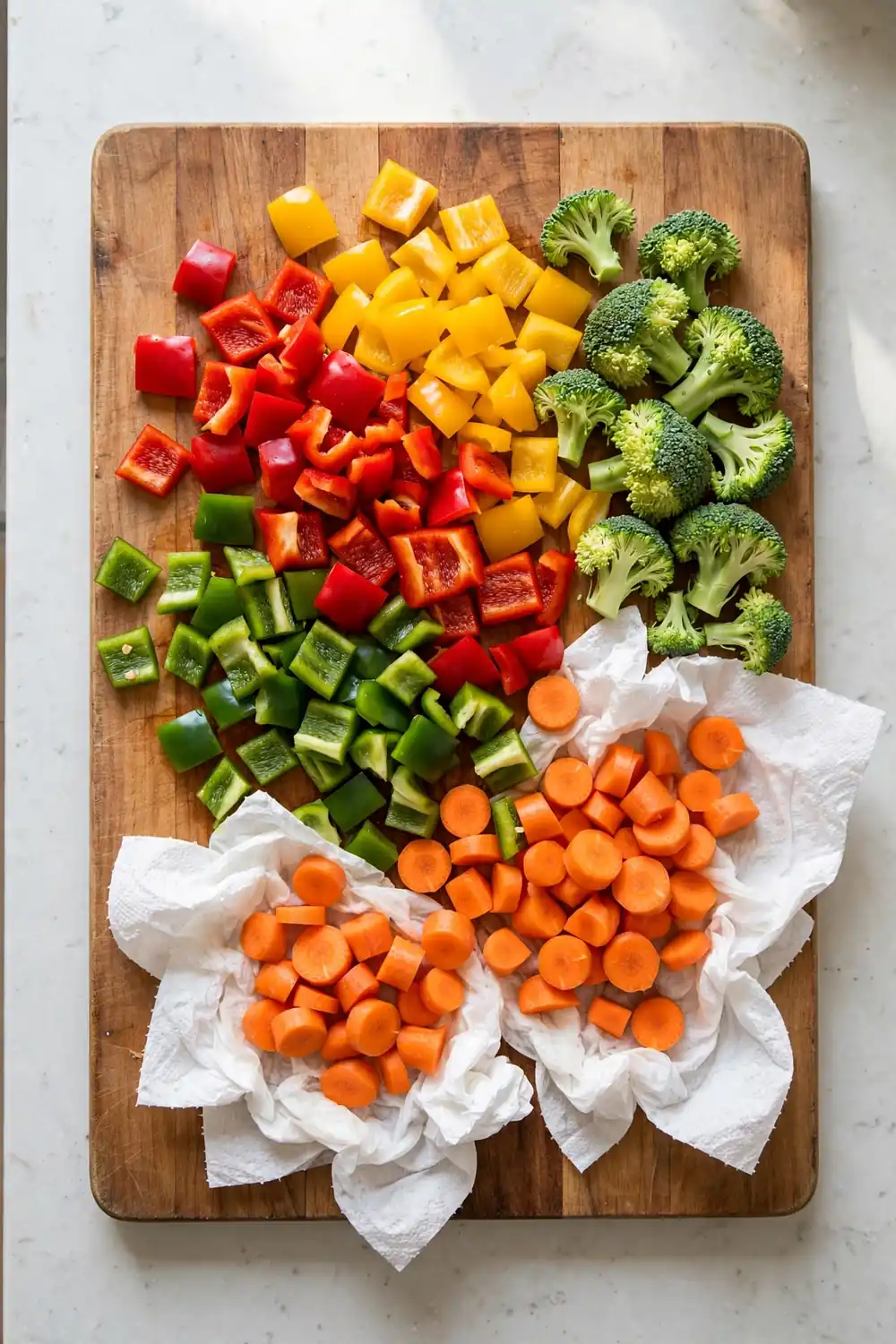
Common Mistake: Most cooks toss washed veggies straight into the wok. Water left on the surface turns to steam, and the steam keeps the pan cool.
The Fix: Pat each batch with paper towels until no drops cling to the surface. Dry veggies meet hot oil, and the fry stays crisp.
Check leafy greens with care, since they hold the most water. Spin them dry in a salad spinner, and shake off the last drops. A quick pat takes seconds, and it saves the whole pan. Never skip this step, even when the veggies look dry already.
Cook in Small Batches
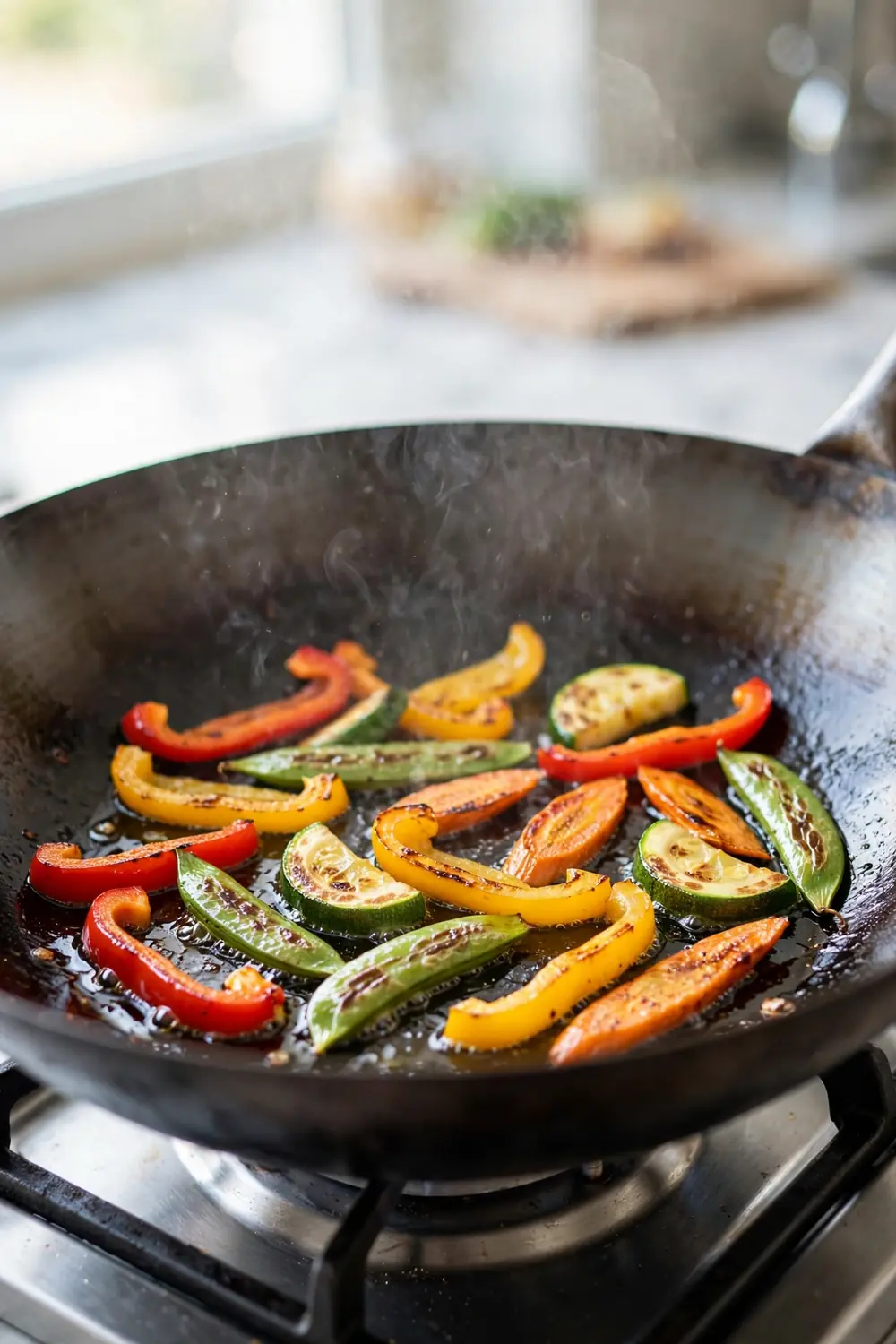
What You Need:
- Large wok: A roomy pan holds heat better than a small skillet.
- Tongs: Toss each batch fast without breaking the veggies.
- Paper towels: Pat each batch dry before it hits the pan.
- Warm plate: Hold cooked batches while the next one sears.
Crowding the pan drops the heat, and the veggies turn soft and wet. Cook one small batch at a time, and leave space between the pieces. The pan stays hot, and the edges brown fast. Small batches keep the fry crisp and glossy every time.
Drain Wet Ingredients
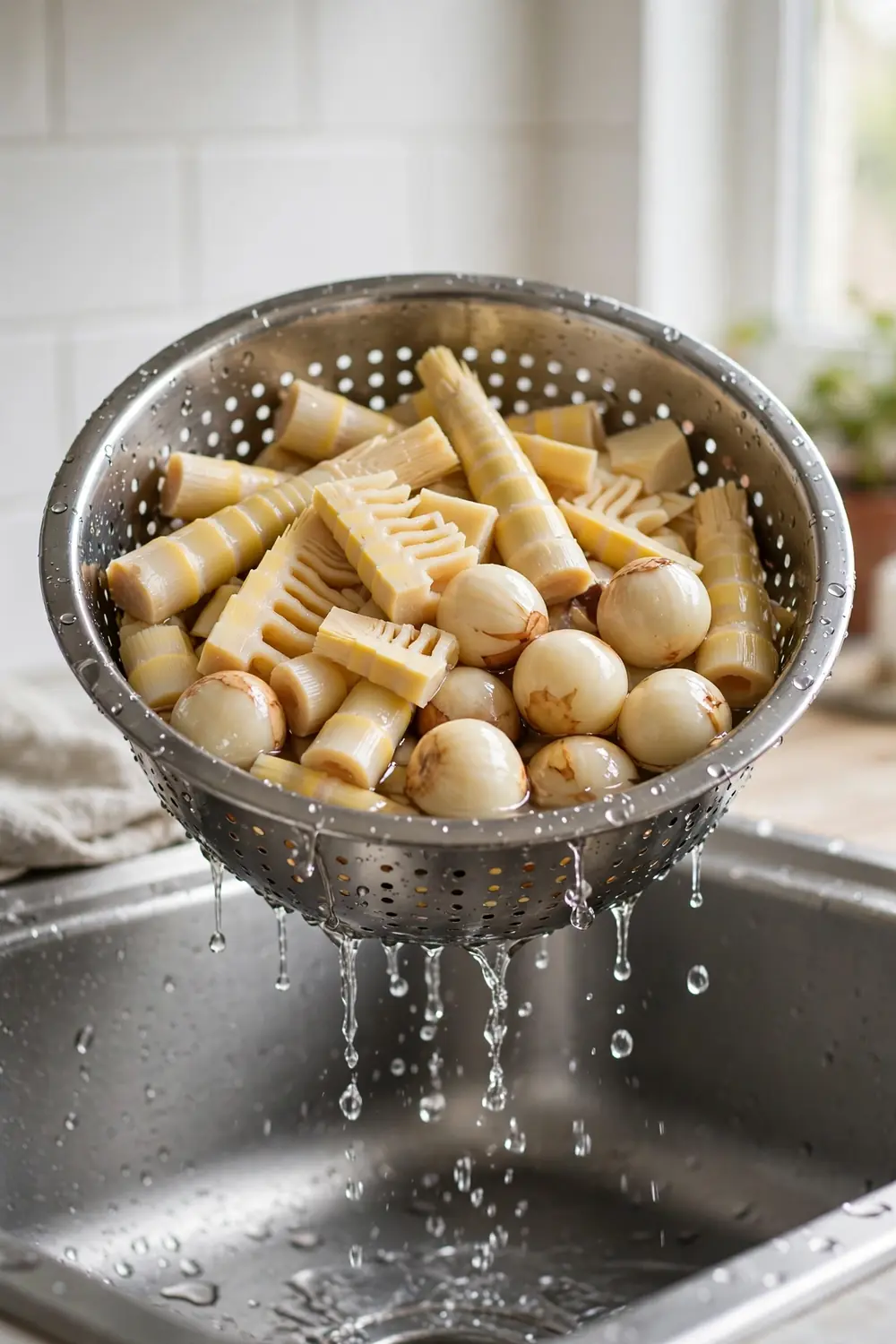
Before: Canned shoots, water chestnuts, and tofu leak water into the pan. Frozen veggies add meltwater on top. The fry turns soggy fast, and the sauce thins out.
After: Drained ingredients hit the hot wok dry. The pan stays hot, and the veggies sear instead of steaming. The sauce coats the fry in a thin gloss.
Press tofu in paper towels, and shake off every drop. Thaw frozen veggies first, then pat them dry before cooking. A frozen batch cools the wok, and the fry steams. Canned shoots need a good rinse and a full drain too. Drain every batch with care.
Use the Right Oil
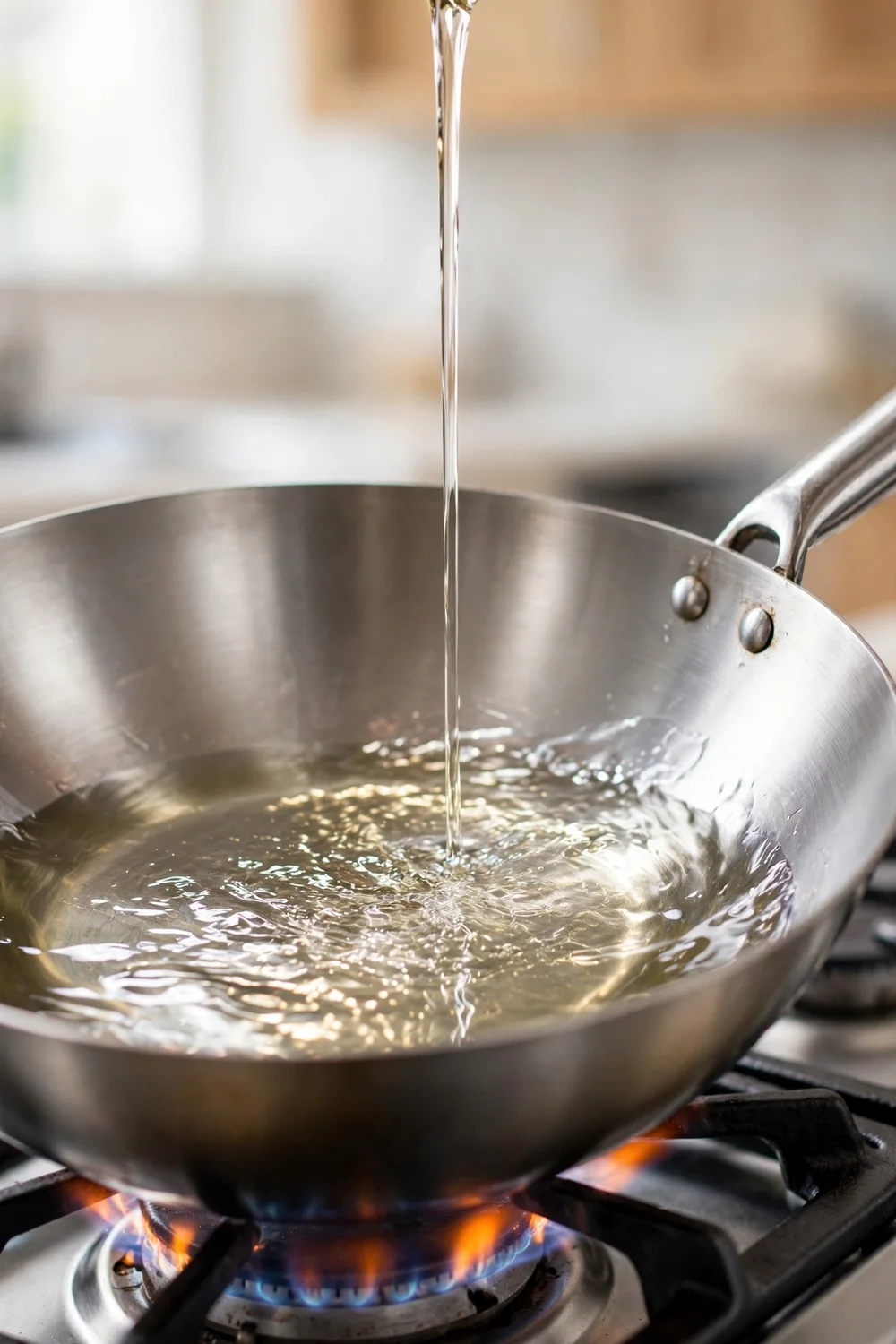
Do This:
- Pick a high smoke point oil like avocado or peanut oil.
- Add just enough oil to coat the pan in a thin layer.
- Let the oil shimmer before the veggies go in.
- Reheat the pan between batches if the oil cools.
Avoid This:
- Do not use butter, since it burns fast and cools the pan as it foams.
- Do not pour in extra oil, since the veggies slide instead of searing.
- Do not add veggies to cold oil.
- Do not let the oil smoke hard before cooking.
The right oil stays hot without smoking, and the veggies sear clean. A thin coat lets the fry grip the heat, and the texture turns crisp. Too much oil pools, and the veggies slide. Wipe out the wok and start fresh if the oil turns dark. Oil it right every time.
Add Sauce Last
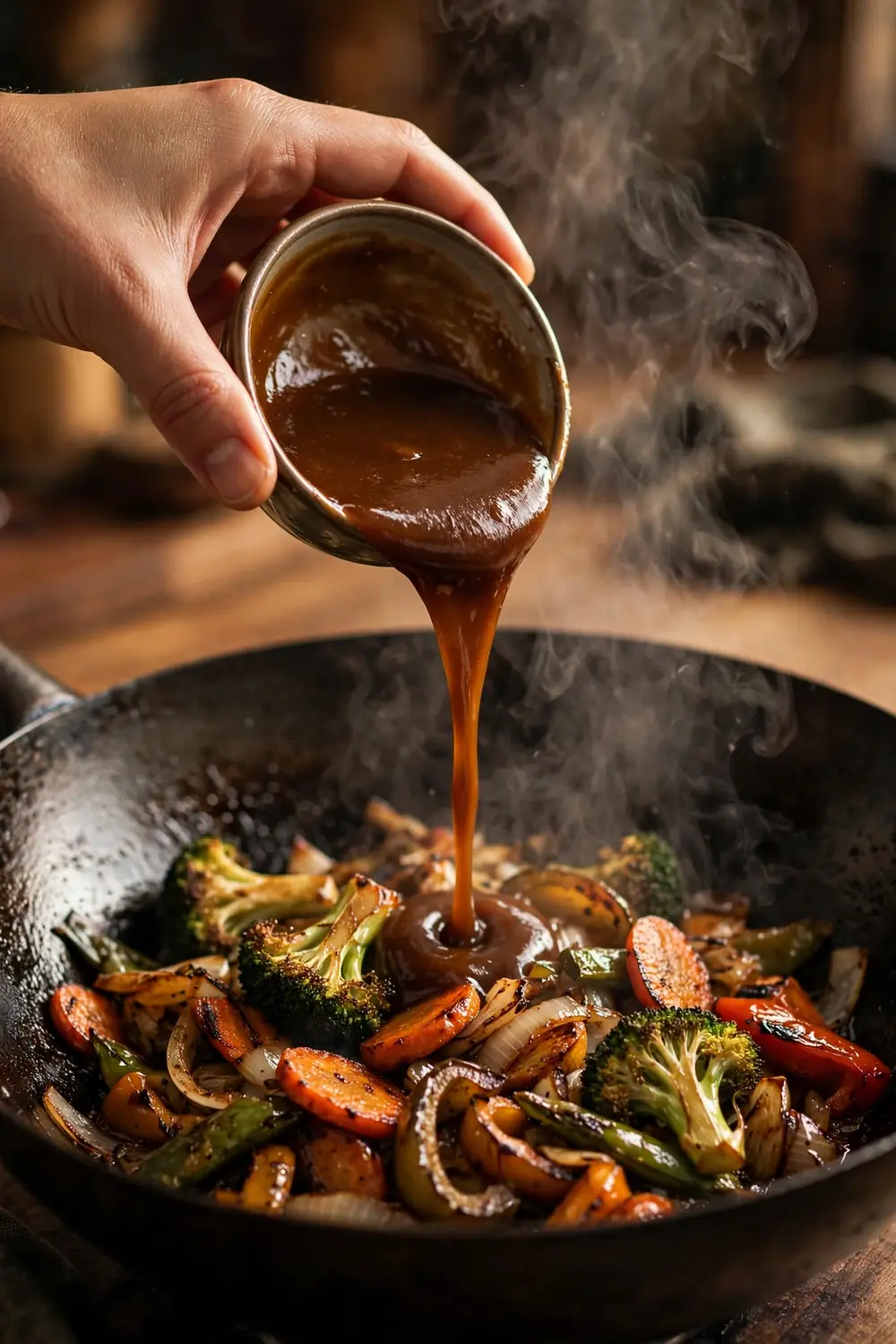
Time Saved: 2 to 3 minutes of steaming
Difficulty: Easy
Best For: Thin sauces that boil fast
Result: Glossy, clinging sauce
Sauce added early boils the veggies, and the pan turns wet fast. Hold the sauce until the veggies are browned and the pan is dry. A late pour coats the fry in a glossy glaze, and the flavor stays rich. Pour it around the hot edges, not over the center.
Thicken the Sauce
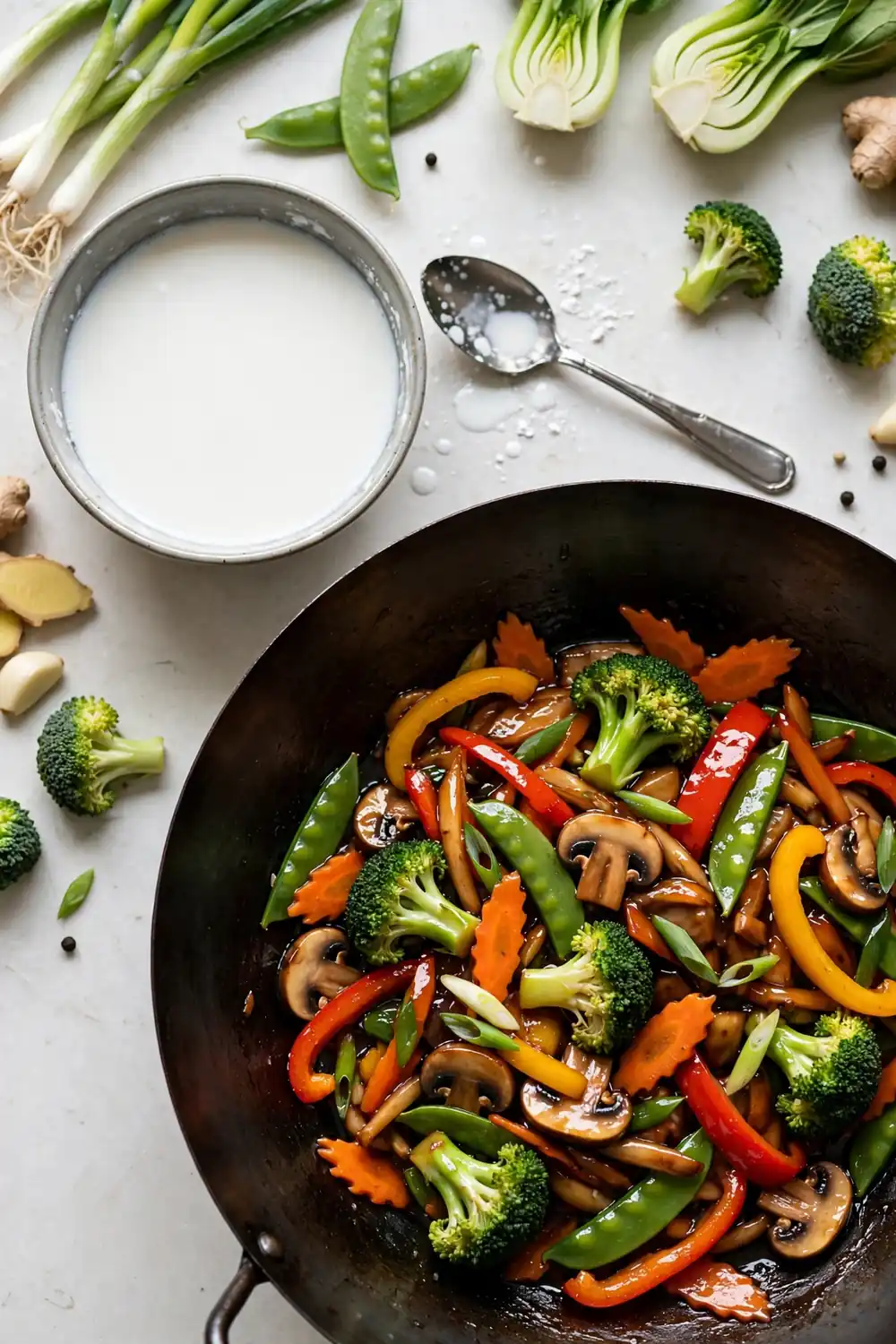
A thin sauce pools in the pan, and the fry swims instead of shining. Mix one teaspoon of cornstarch with cold water, and stir it smooth. Pour the slurry in slowly, and toss the fry until the sauce clings. Keep the heat high while the slurry thickens the sauce.
Add more slurry only if the sauce still runs thin. Too much starch turns the sauce gummy, and the fry turns heavy. A light coat shines on the veggies, and the texture stays crisp. Taste the sauce once it turns glossy. Thicken it right every time.
Common Mistakes to Avoid
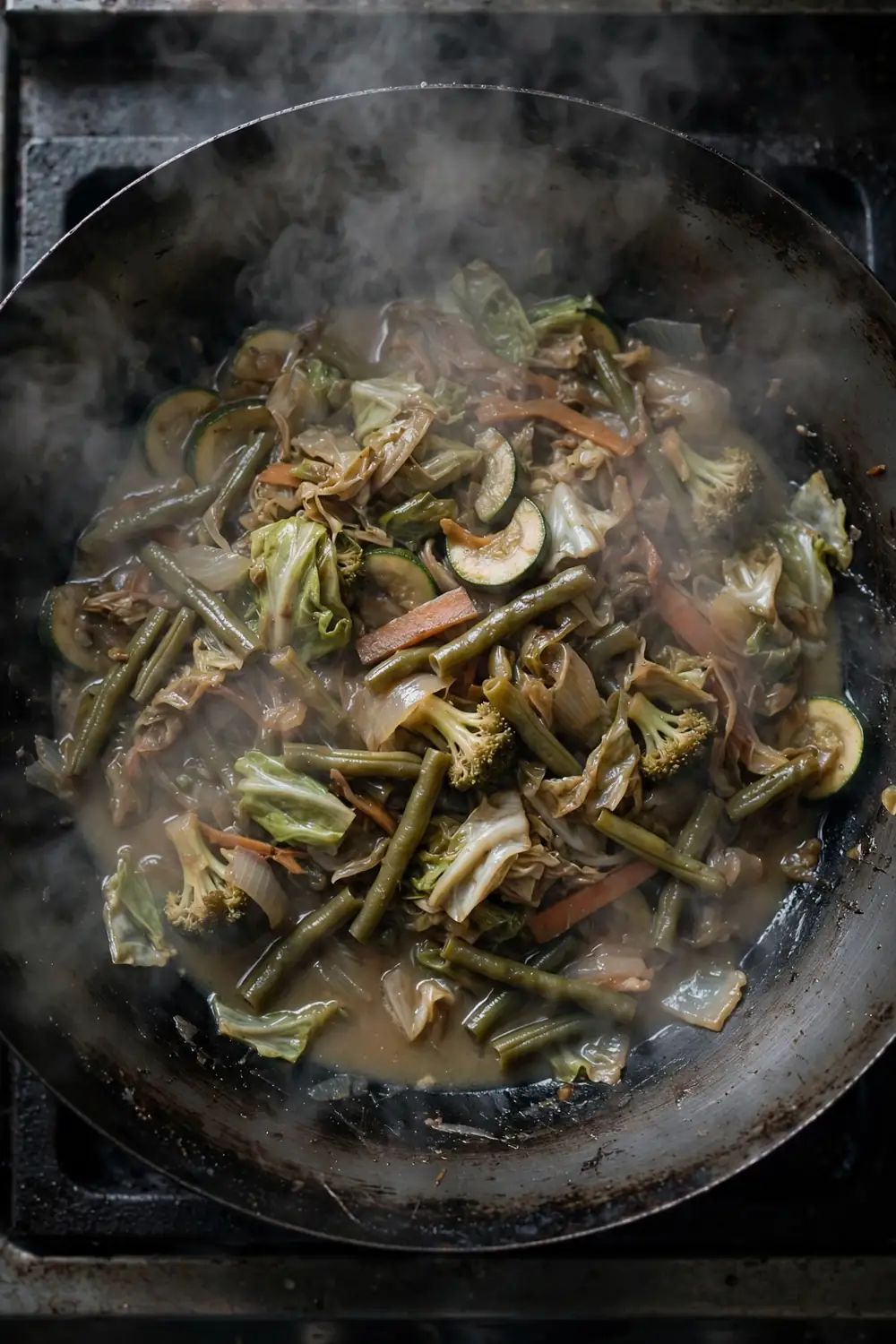
Most soggy pans come from a few repeatable habits, not bad veggies. Fix one habit at a time, starting with a full preheat and dry veggies. The list below covers the mistakes I see most often in home kitchens. Small fixes beat one big rescue.
- Do not skip the preheat, since the pan turns wet fast.
- Do not add sauce early, since the fry swims in liquid.
- Do not crowd the wok, since the heat drops and the veggies steam.
- Do not cook with the lid on, since steam stays trapped in the pan.
What Crisp Looks Like
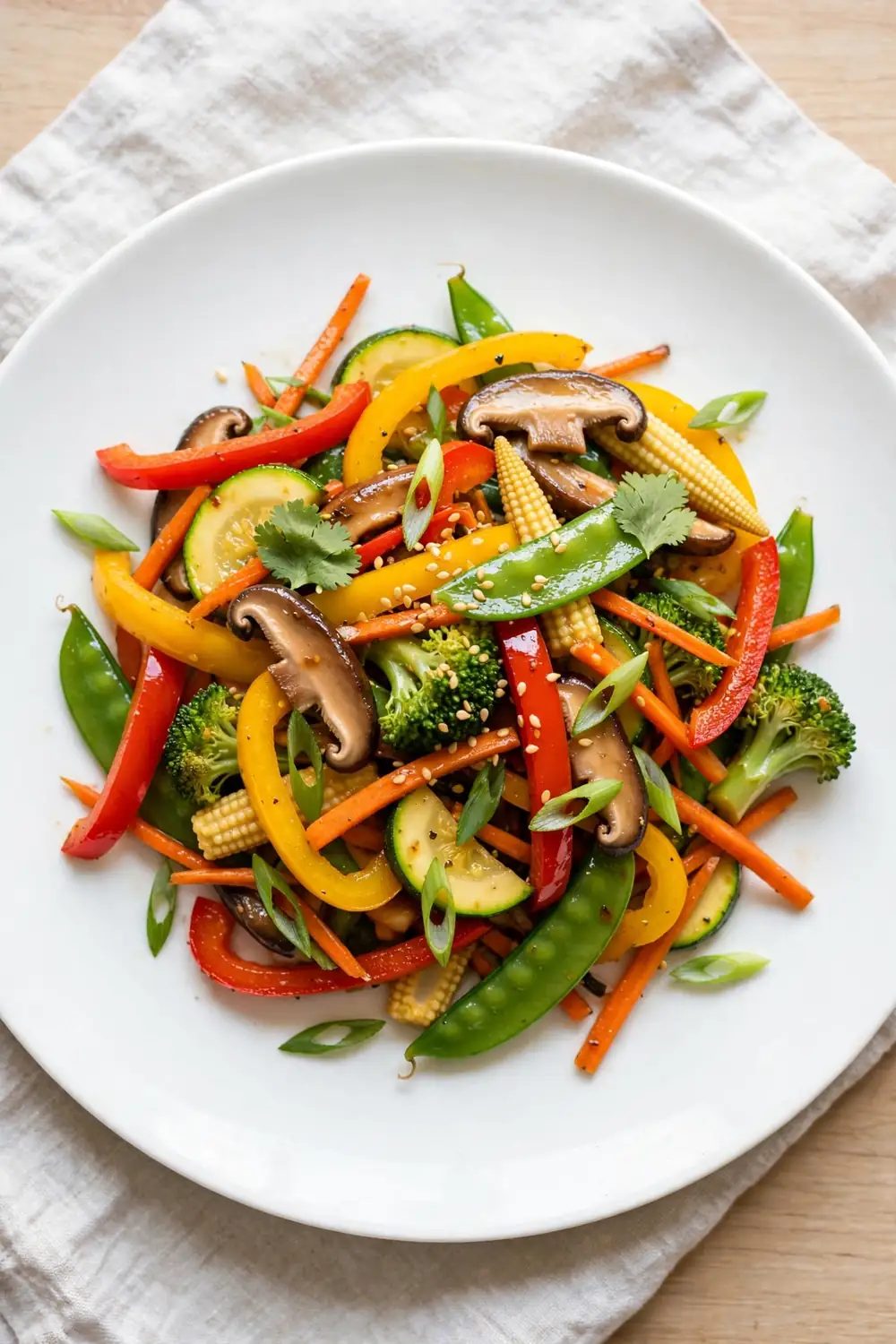
Quick Tip: Serve the fry at once, since it softens as it sits. Bright veggies and a dry pan tell you the method worked, and the plate is ready.
A good fry shows bright veggies, and the sauce clings in a thin gloss. The pieces stay firm, and the pan looks dry at the end. Crisp fry looks inviting, and the flavor stays rich. Taste one piece to check the seasoning first. Serve it fresh for the best bite.
Conclusion
Watery stir fry usually comes from wet veggies and a cool pan, and now you know each fix. Dry veggies, a hot pan, and a late sauce fix it every time. Small steps keep the fry crisp, and the sauce stays glossy.
Use one method at a time, and watch which change helps most. Drain wet ingredients, add the sauce last, and enjoy crisp fry. Your next pan can stay crisp, glossy, and ready to serve.
Save this guide on Pinterest for your next stir fry day. If your eggs also peel badly, read our guide on hard to peel eggs for smooth, clean eggs at home every time.



2 Comments