How To Fix Curdled Cake Batter After Adding Eggs? Easy Fix Guide
If your curdled cake batter looks split and lumpy, you are not alone. Cold eggs, cold butter, and fast mixing all break the emulsion. The good news is that warm ingredients and gentle steps fix it.
This guide covers warming, creaming, eggs, and mixing. You will learn why the batter curdles and how to keep it smooth. Every fix uses basic tools and pantry staples. The fix works fast for every cook.
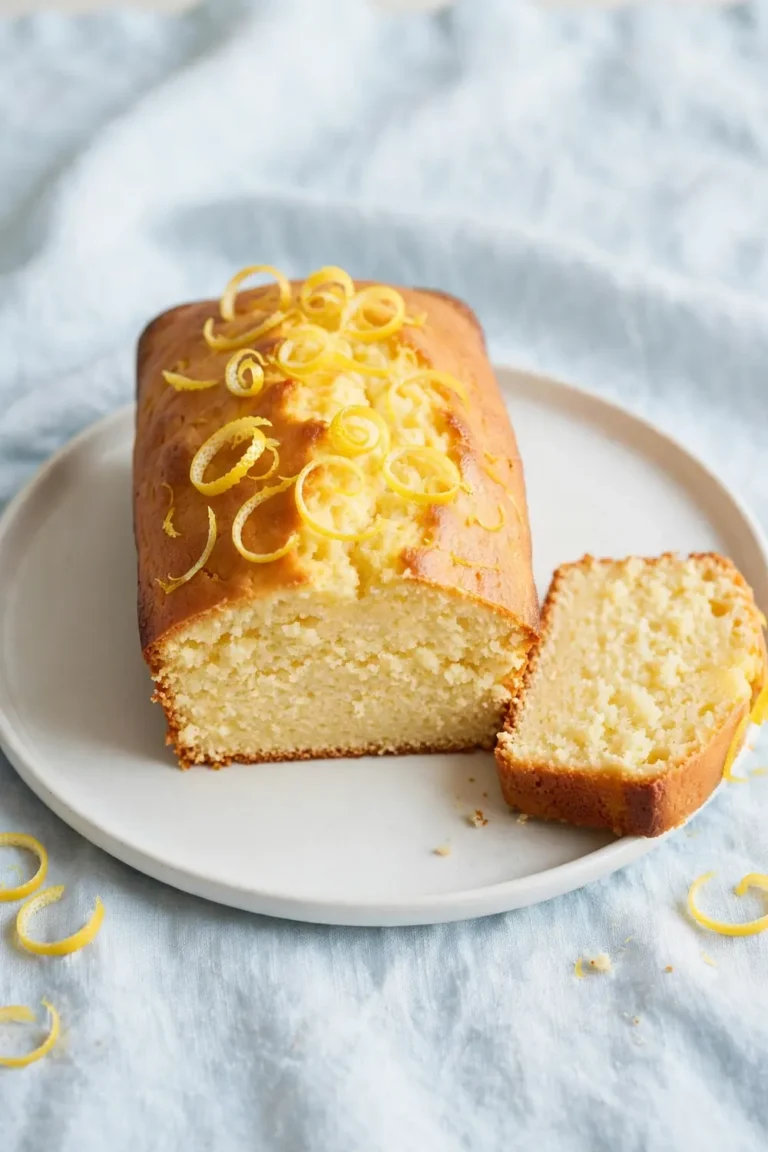
Once your batter stays smooth, the next sponge may need the same care, so keep this sponge cake guide handy for tall, light sponge cakes at every single bake.
Why Batter Curdles

Most split batter comes from a temperature gap between the bowl and the eggs. Cold eggs hit warm creamed butter, the fat seizes, and the emulsion breaks into lumps. Once the batter splits, the cake can bake dense and greasy. Warming every ingredient first keeps the emulsion stable from the start.
Fast mixing makes it worse, since it knocks the air out before the batter can come together. The fix is warm ingredients and slow additions, with patience at every step. Room temperature eggs plus patient mixing give a smooth, glossy batter that bakes light and even.
Warm Ingredients First

Room temperature ingredients are the single most important fix, and they cost nothing extra. Cold ingredients cannot blend into a smooth emulsion, while warm ones combine easily. Set everything out an hour before baking, and check the butter before you start. Follow these steps for an even start.
- Set out butter, eggs, and milk one hour before baking.
- Cut butter into small cubes so it softens evenly.
- Warm cold eggs in a bowl of warm water for 10 minutes.
- Check that the butter dents easily without feeling greasy.
Add Eggs Slowly

Quick Tip: Add eggs one at a time, and beat well after each one. Slow additions let the emulsion hold instead of breaking.
Egg speed decides the texture. A whole batch of eggs dumped at once overwhelms the butter and splits the batter. One egg at a time, fully beaten in, keeps the mix smooth. If the batter looks slightly split, add a spoon of flour with the next egg to bring it back.
Fix a Curdled Batter

Common Mistake: Many cooks keep beating a split batter hard. Fast beating knocks out air and makes the split worse.
The Fix: Add flour and slow down. A spoon of the measured flour stabilizes the emulsion, and gentle mixing lets it come back.
Rescue works well if you stay calm and work gently. Add one spoon of flour, stir gently until the batter smooths, and continue with the eggs. Do not add all the flour early, since that changes the cake. A small, early spoon is enough to rescue the mix and keep the crumb tender.
Cream Butter Right
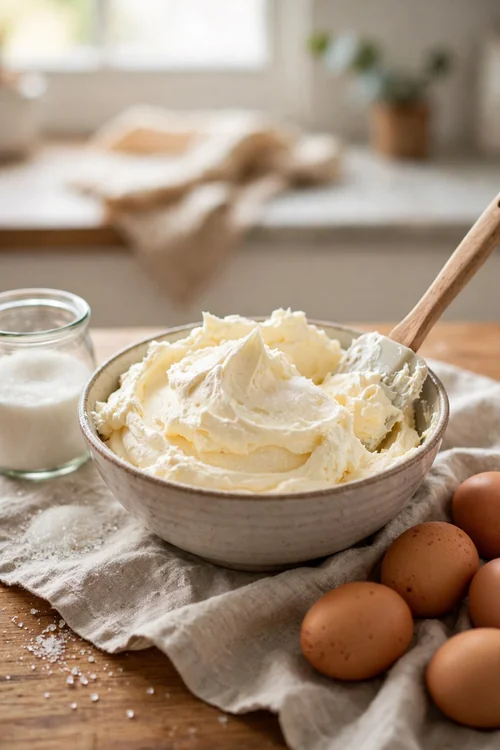
What You Need:
- Room temperature butter: soft enough to dent, not melted or greasy.
- Fine sugar: creams smoothly and dissolves fast.
- Room temperature eggs: blend in without breaking the emulsion.
- A large bowl: gives room for the batter to come together.
- A spatula: scrapes the sides so everything mixes evenly.
Creaming builds the air that lifts the cake, so give it the full time. Beat butter and sugar for 3 to 4 minutes until pale and fluffy, scraping the bowl halfway. Undercreamed butter makes a dense cake, while well creamed butter gives a light, tender crumb. The extra minutes pay off in every slice.
Before Curdled After Smooth

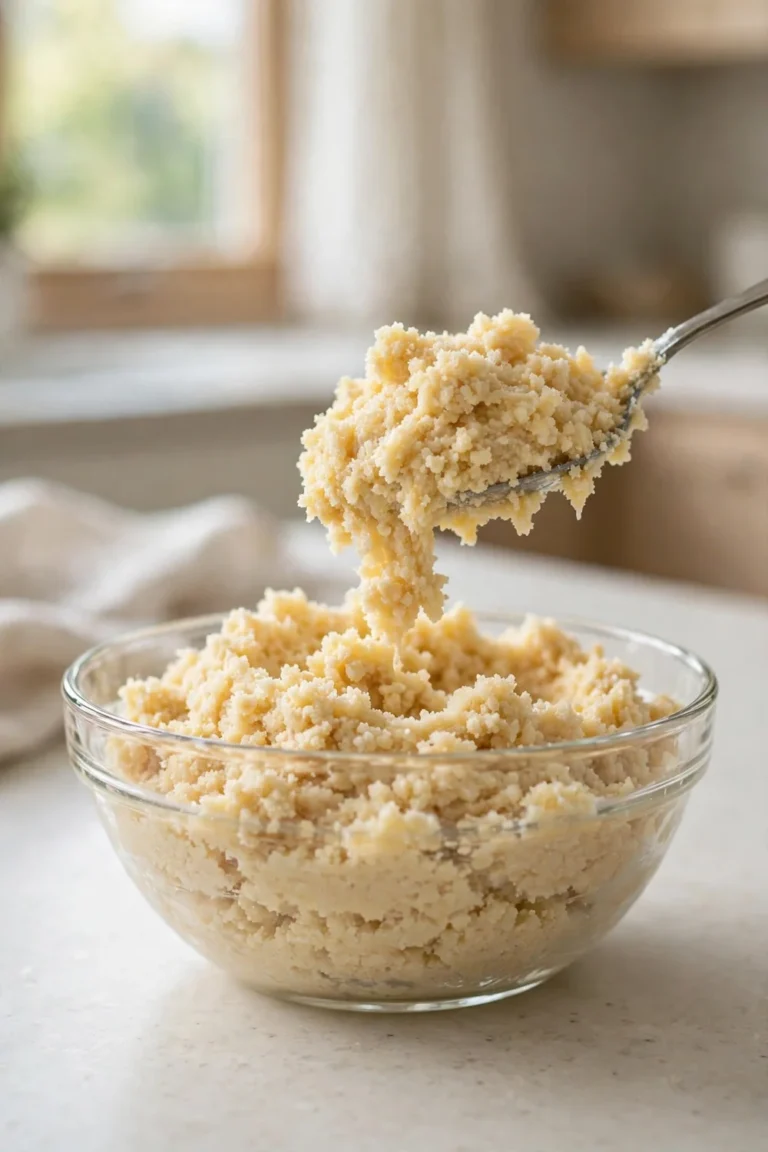
Before: The batter looks split and grainy. Butter flecks float in liquid, and the mix will not come together.
After: The batter is smooth and glossy. It ribbons off the spatula, and the cake will bake light and even.
The change comes from warm ingredients, slow eggs, and gentle mixing, not from a new recipe. Warm everything, add eggs one at a time, and mix gently. Those habits turn a split batter into a smooth one, and the difference shows in the finished cake. Keep the routine steady, and smooth batter follows.
Do and Don’t Basics

Do This:
- Warm butter, eggs, and milk first.
- Cream butter and sugar until fluffy.
- Add eggs one at a time.
- Scrape the bowl between additions.
Avoid This:
- Do not use cold eggs or butter.
- Do not dump all the eggs at once.
- Do not beat a split batter hard.
- Do not add all the flour early.
These habits keep batter smooth from bowl to pan, and they work for every cake. Warm ingredients, slow eggs, and gentle mixing are the whole secret, and none of them needs special equipment. Once the routine is set, smooth batter becomes the normal result. Repeat the routine, and smooth batter follows every time.
Quick Batter Facts

Time Needed: 20 minutes mixing plus baking.
Difficulty: Easy, with attention to temperature.
Best For: Layer cakes, loaf cakes, and cupcakes.
Pro Tip: A warm bowl helps on cold days.
A cold kitchen chills the batter as you mix. Set the bowl in a larger bowl of warm water for a minute if the butter starts to firm. The batter will stay smooth, and the emulsion will hold. Do not overheat the bowl, or the butter will melt and the batter will split again.
Mix Just Enough

Mixing just enough keeps the cake tender, and the flour stage is where it counts. Once the flour goes in, every extra stir builds gluten and toughens the crumb. Fold gently and stop as soon as the flour streaks vanish, even if a few small lumps remain. Those lumps bake out, and the crumb stays tender.
Scrape the bowl once, fold from the bottom up, and check the batter in the light. A few small lumps are fine, since they bake out. Overmixed batter looks shiny and tight, and it bakes into a tough cake.
Rescue a Split Batter
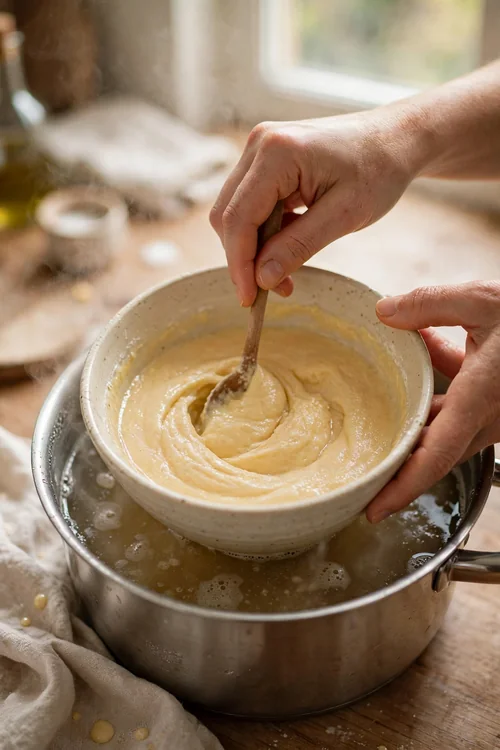
A split batter can still be saved with warmth and flour, so do not throw it out. Gentle heat re-melts the butter, and a spoon of flour stabilizes the mix. Work slowly and let the emulsion come back together. Follow these steps to rescue a split batter and bake it.
- Set the bowl over a bowl of warm water.
- Stir gently until the butter softens.
- Add one spoon of the measured flour.
- Continue with the eggs, one at a time.
- Mix gently and bake at once.
Bake With Confidence

Quick Tip: Bake as soon as the batter is mixed. Batter that sits loses air, and the cake will bake dense.
Baking promptly protects the air you built, so work without delay. Pour the batter into a prepared pan, smooth the top, and set it in the oven at once. The same batter will bake far better fresh than after sitting on the counter. Trust the mix, and let the oven do the rest.
Conclusion
Fixing curdled cake batter comes down to warm ingredients, slow eggs, and gentle mixing. Those three habits give smooth batter and a tender cake. Once they are routine, smooth batter takes no extra effort.
Take the fixes one at a time, and your next batch will show a clear improvement. Write down what worked, so the fix gets faster every time you cook.
Warm everything first, and add eggs one at a time. For another cake that needs a gentle hand, see this cookie dough guide, then bake your cake while the batter is still fresh.