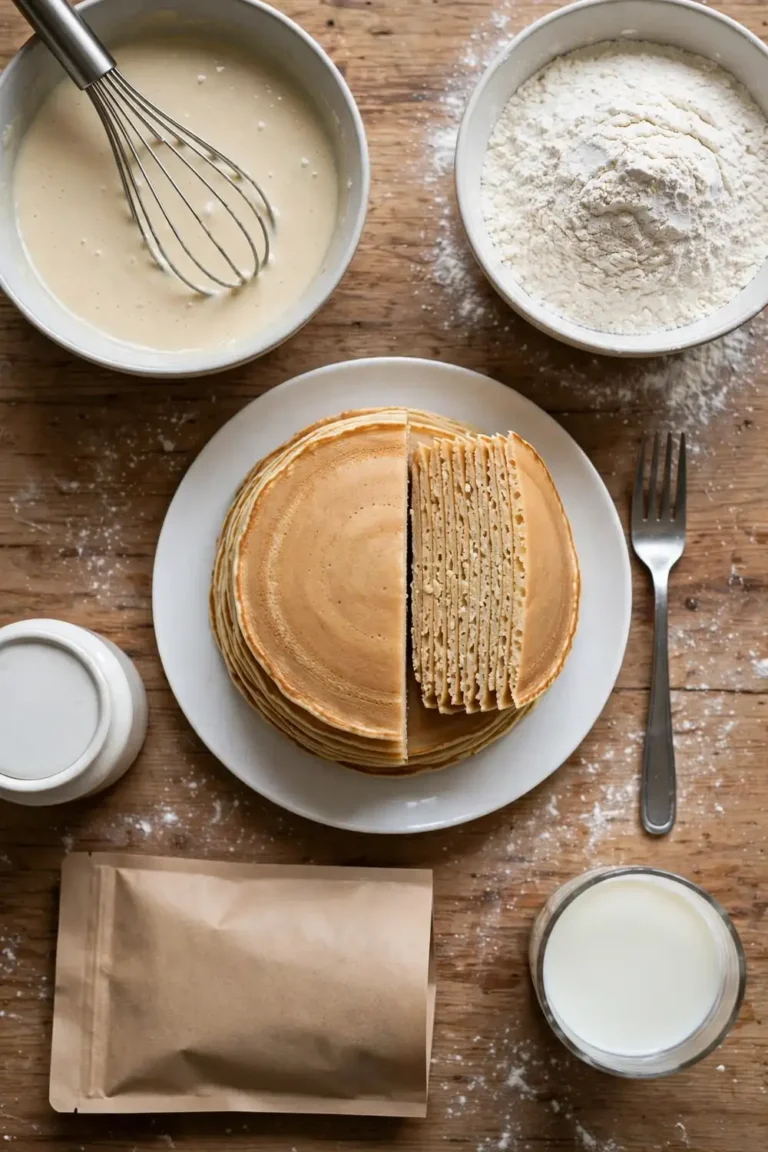
Why Is My Crepe Batter Lumpy And Tearing? Easy Fix Guide
A bowl of lumpy crepe batter promises torn, uneven crepes. The lumps fry into thick spots, the thin parts tear, and the whole batch looks messy. The fix usually comes down to mixing order, rest, or one quick strain.
This guide walks through each fix in order, from mixing to resting to cooking. You need no special tools, just a little care and pantry staples. Most lumpy bowls smooth out with one or two small changes. A gentle hand beats fast whisking every time. Small fixes make a big difference here. For cream puffs that stay flat instead, see cream puffs for tall, golden shells.
Why Crepe Batter Lumps

Crepe batter lumps for three main reasons: flour added too fast, cold milk, and no rest. Flour dumped in at once forms dry pockets that whisking cannot break. Cold milk stiffens the batter, and skipping the rest leaves the flour unevenly hydrated.
The good news is that each cause has a simple fix. Once you see which one hit your bowl, you can correct it before cooking. Think of crepe batter as gentle work, not a race. A few small changes make a big difference here. Your patience shows in every smooth crepe.
Blend It Smooth

A blender is the fastest way to smooth crepe batter. It breaks every lump in seconds and gives a perfectly even mix. If you own one, use it for crepes every time. Thirty seconds of blending beats five minutes of whisking.
- Add wet ingredients to the blender first, then flour.
- Blend on low for thirty seconds until smooth.
- Scrape the sides once and blend ten seconds more.
- Pour into a bowl and rest before cooking.
Rest the Batter

Quick Tip: Rest the batter for thirty minutes before cooking. The flour hydrates fully, the bubbles settle, and the crepes cook thinner and more evenly. This one step fixes more batter than any tool.
Cover the bowl and leave it on the counter, not in the fridge, for a short rest. Cold batter thickens and cooks unevenly. In my experience, a rested batter pours like cream and folds without tearing. Give it the time it needs. Patience here is the whole secret.
Strain Out Lumps

Common Mistake: Many cooks pour lumpy batter straight into the pan, hoping the heat will smooth it. The lumps fry into thick spots, the crepes tear, and the batch looks messy.
The Fix: Pour the batter through a fine mesh strainer into a clean bowl. The strainer catches every lump in seconds, and the batter below turns perfectly smooth.
Press the last bits through with a spatula, then discard the lumps. Straining takes one minute and saves the whole batch. Keep a strainer near the stove for every crepe day. A smooth batter cooks into a smooth crepe. Trust the strainer here. Your crepes will thank you.
Fix the Flour Ratio

What You Need:
- Flour: one cup, spooned and leveled for accuracy.
- Eggs: two large, at room temperature.
- Milk: one and a quarter cups, lukewarm.
- Butter: two spoonfuls, melted and slightly cooled.
- Salt: a pinch sharpens the flavor.
Too much flour makes a thick batter that cooks lumpy and heavy. Too little makes crepes that tear before they set. Weigh the flour when you can, and keep the ratio steady every time. Measure first and the batter stays in control. Trust the recipe here.
Wet First, Dry Later

Before: The flour went in first, the milk followed in one pour, and the whisk chased dry pockets that never broke. The batter stayed lumpy, and the crepes tore at every fold.
After: The wet ingredients went in first, the flour followed slowly, and the whisk moved in calm circles. The batter turned silky, and the crepes cooked thin and even.
Order matters more than speed in crepe batter. Wet first gives the flour nowhere to hide. Add flour a little at a time, whisking gently between additions, and the batter stays smooth. A calm pace beats a fast whisk every single time. Slow down and watch it smooth out.
Whisk Without Lumps

Do This:
- Whisk in slow circles, reaching the bowl edges.
- Add flour a spoonful at a time, not all at once.
- Use lukewarm milk so the flour blends fast.
- Rest the batter before you judge it.
Avoid This:
- Do not dump all the flour in at once.
- Do not whisk so hard that foam fills the batter.
- Do not use cold milk straight from the fridge.
- Do not skip the strainer if lumps remain.
Gentle whisking keeps the batter smooth and bubble free. Hard whisking whips in air that turns into holes in the pan. Treat the batter calmly, and the crepes reward you with thin, even folds. Patience at the bowl beats speed every single time. Trust the process.
Batter Thickness Matters

Time Needed: About 10 minutes, plus 30 minutes of rest.
Difficulty: Beginner friendly with easy steps.
Cost: Uses pantry staples you already own.
Best For: Breakfast, brunch, and dessert crepes.
Crepe batter should pour like heavy cream, thin enough to swirl. A thick batter cooks heavy and lumpy, while a thin one tears. Test with a ladle: the batter should coat it in a thin, even layer. Adjust with a splash of milk if it looks thick.
Cook Thin Crepes

Cooking matters as much as mixing for smooth crepes. A hot pan sets the batter fast, so lumps never get a chance to smooth out. A pan at the right heat lets the batter swirl thin and even.
Butter the pan lightly and pour a small ladle of batter. Tilt and swirl at once so the batter spreads thin. Cook until the edges lift, flip once, and slide the crepe onto a plate. Work quickly, since crepes cook in under a minute. Your first crepe is always a test, so relax.
Rescue Lumpy Batter

Already mixed a lumpy batter? Do not throw it out. A blend or a strain fixes most bowls in minutes, and a rest smooths the rest. The rescue takes little time and no special tools. Start with the simplest fix first.
- Pour the batter through a fine mesh strainer into a clean bowl.
- Blend for thirty seconds if lumps remain after straining.
- Rest the batter for fifteen minutes before cooking.
- Stir gently and cook a test crepe to check.
Next Batter Checklist
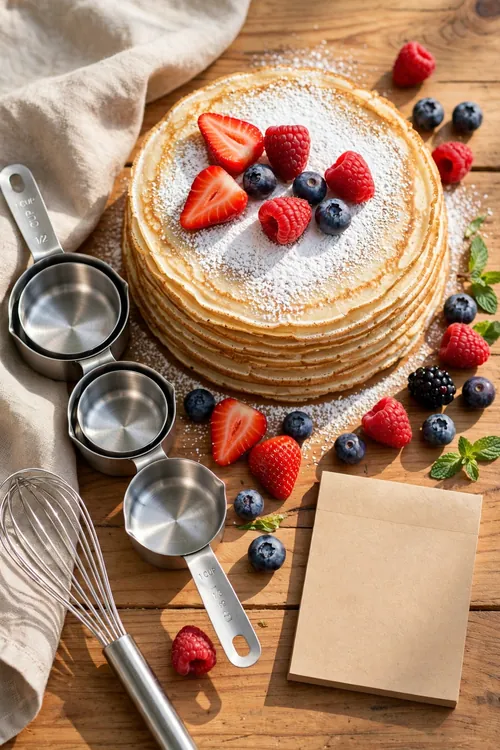
Quick Tip: Keep this checklist near the stove for your next batch. A glance before mixing saves a rescue later. Soon the habits feel automatic, and every batter lands silky and smooth.
Great crepes come from habits, not luck. Add wet first, whisk gently, rest the batter, and strain before cooking. Check the pour early, adjust the next batch, and enjoy crepes that fold cleanly to the last one. That is a batch worth repeating. Your pan will thank you.
Conclusion
Silky crepe batter comes from the right mixing order, a good rest, and a quick strain before cooking. Fix those three habits and lumpy crepe batter becomes a rare mishap instead of the usual result. Start with wet ingredients first, rest the batter, and strain it smooth. Your next batch should pour thin, cook evenly, and fold without tearing to the last crepe. If another dish puzzles you, read collapsing loaf for tall loaf fixes. Keep this guide handy and cook with confidence every single time at the table. Serve proudly.