Why Is My Paratha Hard After Cooling? Easy Fix Guide
If your hard paratha cracks like a cracker, you are not alone. Stiff dough, no resting, and dry cooking all make it tough. The good news is that soft dough and gentle heat fix it fast.
This guide covers kneading, resting, rolling, and cooking. You will learn why the paratha turns hard and how to keep it soft and flaky. Every fix uses basic tools and pantry staples. The fix works fast.
Once your parathas turn soft, the next baked treat may need the same care, so keep the stale cookies guide handy for soft, fresh cookies in every batch with steady heat.
Why Parathas Turn Hard

Most stiff flatbreads come from a dough that never got enough water or rest. Too little water and hard kneading pull the gluten tight, so the dough cannot relax and the cooked flatbread turns dry and leathery. Once the dough is tight, no amount of fat brushed on top can rescue it.
High, dry heat makes the problem worse, since it dries the surface before the center cooks through. The fix is a soft, well rested dough, medium heat, and enough fat on the griddle. Soft dough plus rest plus fat gives a flatbread that stays tender.
Knead a Soft Dough
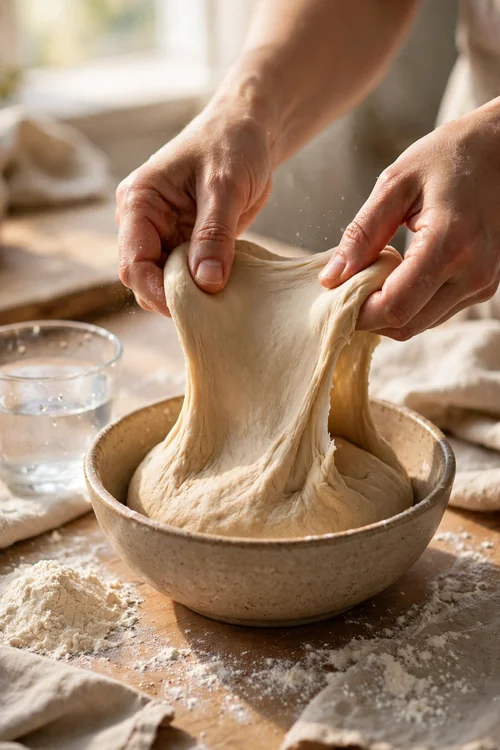
Soft dough is the foundation of a tender flatbread, and it should feel supple and slightly tacky, never firm or dry. A soft dough rolls thin without tearing, cooks evenly on the griddle, and stays flexible after cooling. Follow these steps for a dough that rolls easily every time.
- Mix whole wheat flour with warm water a little at a time.
- Knead for 5 minutes until the dough feels soft and smooth.
- Add a teaspoon of oil and knead for one more minute.
- Cover and rest the dough for 30 minutes.
Rest Dough Before Rolling
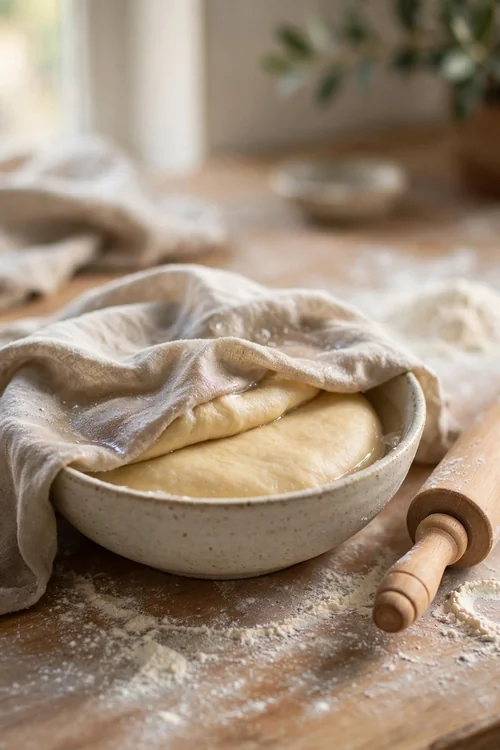
Quick Tip: Never skip the rest. Resting relaxes the gluten, so the dough rolls thin without springing back and cooks up soft.
Resting is the step that separates soft parathas from hard ones. A rested dough rolls out easily and stays thin, while an unrested dough fights the rolling pin and shrinks back. Give the dough at least 30 minutes, and an hour is even better. The wait pays off in every bite.
Fix a Stiff Paratha

Common Mistake: Many cooks roll parathas with too much dry flour. The extra flour dries the dough and makes the finished paratha hard.
The Fix: Use a light dusting of flour and brush with ghee while cooking. The fat keeps the layers soft and flaky.
Rescue works best while the flatbread is still hot from the griddle. Brush it with ghee, press gently with a spatula, and stack it in a covered dish right away. The trapped steam softens the layers, and the ghee adds richness through every bite. Serve the stack warm for the softest result.
Use Enough Ghee
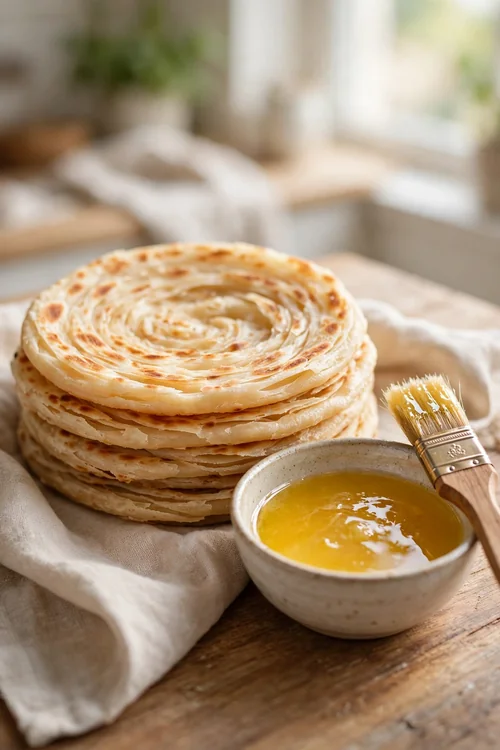
What You Need:
- Whole wheat flour: the classic base, with enough bran for flavor.
- Warm water: softens the flour faster than cold water.
- Ghee or oil: keeps the layers soft and adds richness.
- A rolling pin: rolls the dough thin and even.
- A flat griddle: cooks the paratha evenly on medium heat.
Ghee is not just flavor, it is the softness. A dry flatbread hardens as it cools, while a ghee brushed one stays tender longer. Brush each side lightly while cooking, and add one more brush after the flatbread leaves the griddle. The layers will stay soft and flaky even as the stack cools.
Before Hard After Soft

Before: The paratha is stiff and dry. The edges crack, the layers stick together, and each bite feels tough.
After: The paratha is soft and flaky. The layers separate, the surface is golden, and each bite is tender.
The change comes from soft dough, a full rest, and generous ghee, not from a new flour. Knead soft, rest well, and cook with enough fat on a steady griddle. Those habits turn a stiff flatbread into one that folds without cracking, and the difference shows in the first bite.
Do and Don’t Basics

Do This:
- Knead a soft, supple dough.
- Rest the dough for 30 minutes.
- Roll evenly and not too thick.
- Cook on medium heat with ghee.
Avoid This:
- Do not use a stiff, dry dough.
- Do not skip the resting time.
- Do not roll with too much dry flour.
- Do not cook on high, dry heat.
These habits keep flatbreads soft from dough to table, and they work for every batch. Soft dough, a good rest, and enough fat are the whole secret. Once the routine is set, tender flatbreads become the normal result at your table, not a lucky accident. Repeat the routine, and soft texture follows every time.
Quick Paratha Facts

Time Needed: 20 minutes plus 30 minutes resting.
Difficulty: Easy, with a little practice.
Best For: Curries, yogurt, pickles, and breakfast.
Pro Tip: Stack cooked parathas and cover them.
Stacking traps steam, and the steam keeps the whole stack soft. Place each cooked flatbread on the stack and cover it with a clean cloth right away. By the time the last one is done, the first one will be even softer. Serve the stack warm, and keep it covered between servings.
Cook on Right Heat

Medium heat is the right heat for flatbreads. High heat dries the surface before the center cooks, while low heat leaves the flatbread pale and tough. The griddle should be hot enough to sizzle lightly when the dough touches it, and it should stay steady through the batch.
Flip the flatbread when the first side shows light spots, then brush with ghee. Press gently with a spatula so the layers puff. A flatbread that puffs has steam inside, and steam means softness. Cook until golden on both sides, then move it to the covered stack.
Rescue a Hard Batch

A stiff batch can still be softened with steam and fat, so do not throw it away. Warm the flatbreads gently, brush them with ghee, and hold them covered so the moisture returns. The rescue takes only a few minutes. Follow these steps to bring back a soft, flexible texture.
- Sprinkle the parathas lightly with water.
- Warm them in a covered pan on low heat.
- Brush each side with ghee.
- Stack and cover with a damp cloth.
- Rest 10 minutes, then serve warm.
Serve Them Warm

Quick Tip: Serve parathas in a cloth lined basket. The cloth holds the warmth and the steam, so the parathas stay soft through the meal.
Serving warm protects the texture, so plan the timing around the meal. A cold plate chills flatbreads fast and firms them up. Keep the basket covered until everyone is seated, and serve the curry alongside. The same flatbreads will taste far better served warm than left standing. Warm flatbreads stay soft to the last bite.
Conclusion
Fixing hard paratha comes down to soft dough, a good rest, and enough ghee. Those three habits give soft, flaky parathas. Once they are routine, tender parathas take no extra effort.
Take the fixes one at a time, and your next batch will show a clear improvement. Write down what worked, so the fix gets faster every time you cook.
Roll evenly, cook on medium heat, and stack covered. For another baked good that dries out fast, see the soggy pakoras guide, then serve your parathas while they are still warm.