Why Are My Waffles Soggy Instead of Crispy? Easy Fix Guide
If your soggy waffles come out of the iron soft and limp, you are not alone. Many home cooks face the same damp result even with a trusted recipe. The good news is that a few small changes can turn the next batch crisp and golden.
Waffles turn crisp when hot iron dries the outside fast and steam escapes. A cool iron, thin batter, and a closed stack all trap moisture. In my experience, heat and airflow fix most limp batches.
This guide walks through each cause in order, from iron heat and batter to cooling and serving. Follow the steps, and your next waffles should stay crisp long after they leave the iron. And if wet middles are your trouble instead, see why soggy french toast happens and how to cook it through.
Why Waffles Turn Soggy
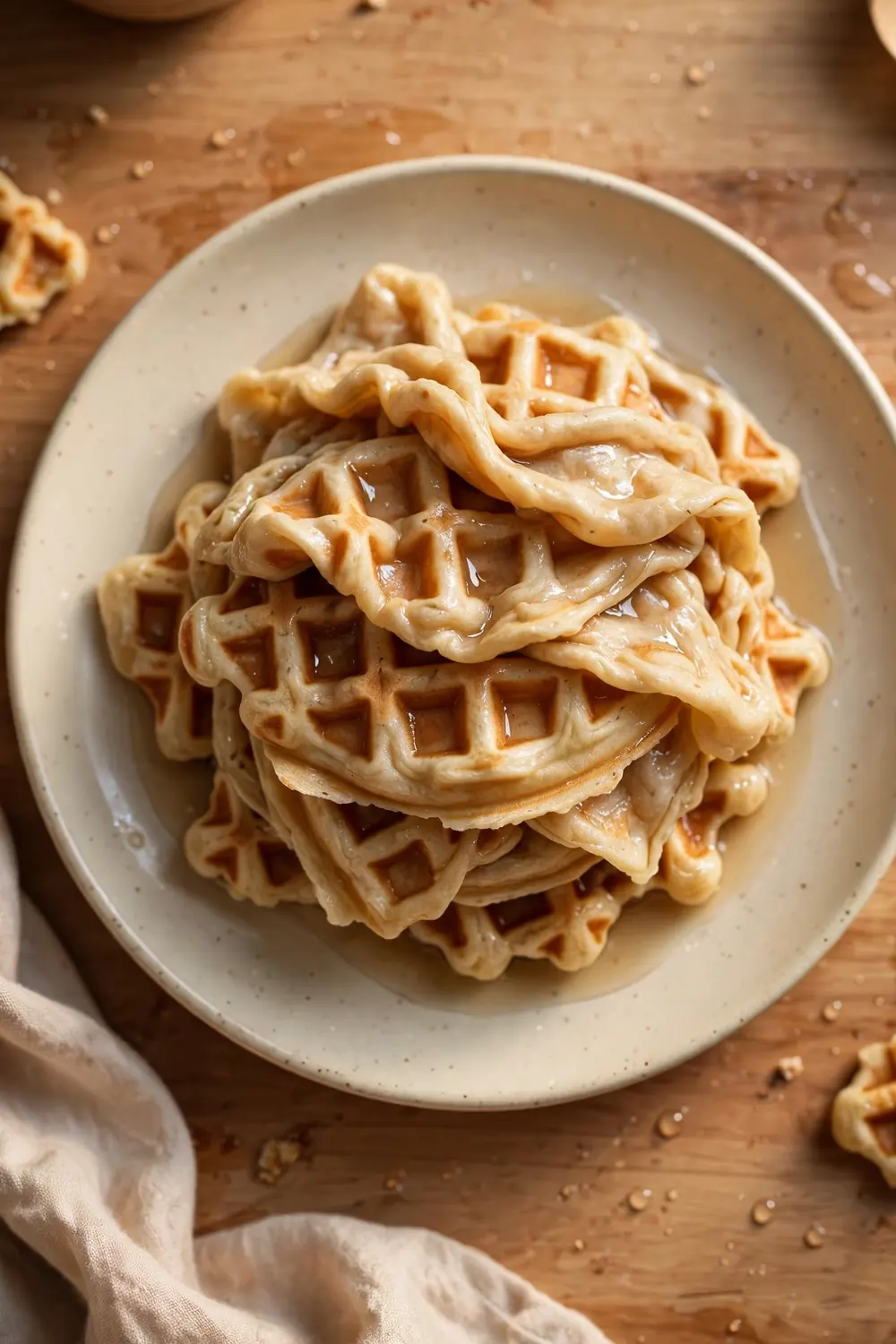
Waffles stay soft when steam cannot escape and the outside never dries out. A cool iron bakes the batter slowly, so moisture stays trapped inside. Thin batter holds extra water, and stacking hot waffles seals the steam in. Each factor leaves the crust damp instead of crisp.
Soggy results also come from opening the iron too soon and letting the waffle cool on a plate. A plate traps steam under the waffle, so the bottom turns soft. Knowing the cause helps you pick the fix, so the next batch turns crisp and stays crisp rather than going limp.
Preheat the Iron Well
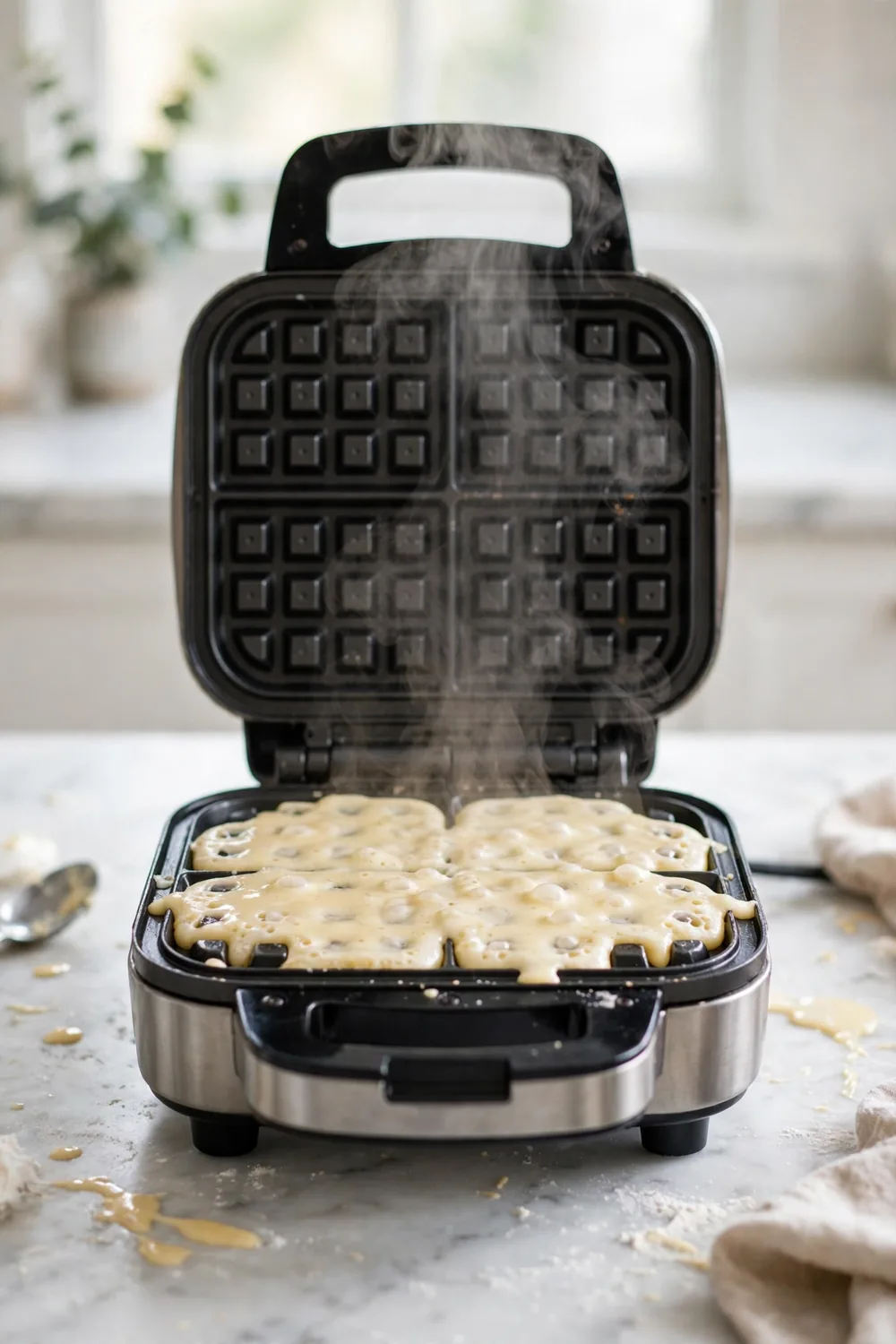
A fully hot iron is the secret behind crisp waffles. When batter hits hot plates, the outside sets fast and steam rushes out. A lukewarm iron bakes the batter slowly, so moisture stays trapped. Wait for the ready light and a full heat cycle before the first pour.
Give the iron five minutes to heat, even if the light comes on early. Test the heat with a small spoon of batter, since it should sizzle at once. Keep the iron closed between batches so it stays hot. A hot iron and a quick bake give a crisp shell.
Use the Right Batter
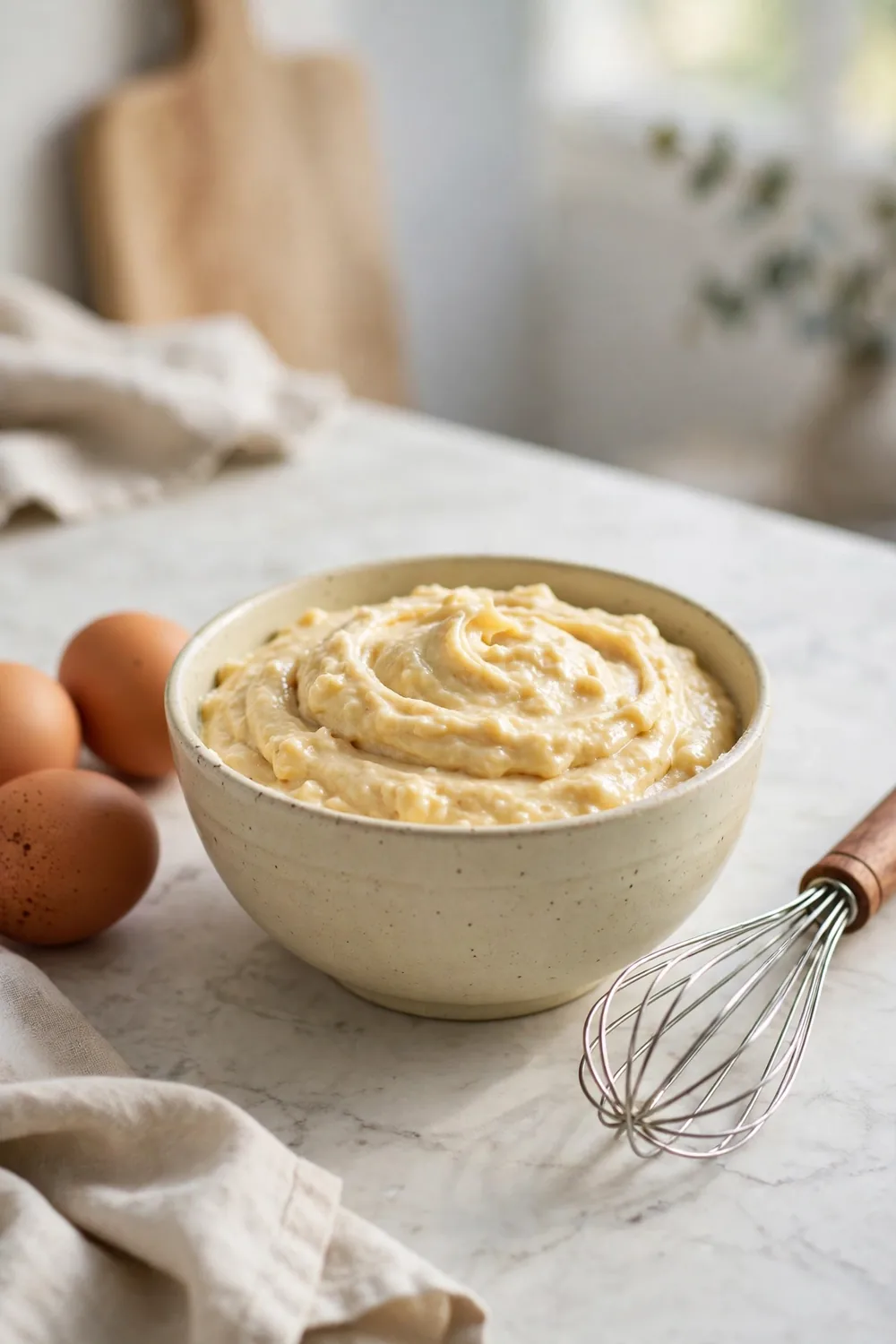
Batter decides whether waffles crisp or stay soft. Too much milk leaves extra water that steam cannot drive off in time. Too little fat leaves a dry waffle that never browns well. Use the recipe amounts, and measure milk and flour with care so the batter stays balanced.
Separate the eggs if the recipe calls for it, since whipped whites add lift without extra liquid. Fold them in gently at the end, and stop when no white streaks remain. A light, well mixed batter bakes into a crisp shell with a tender inside.
Keep the Batter Thick
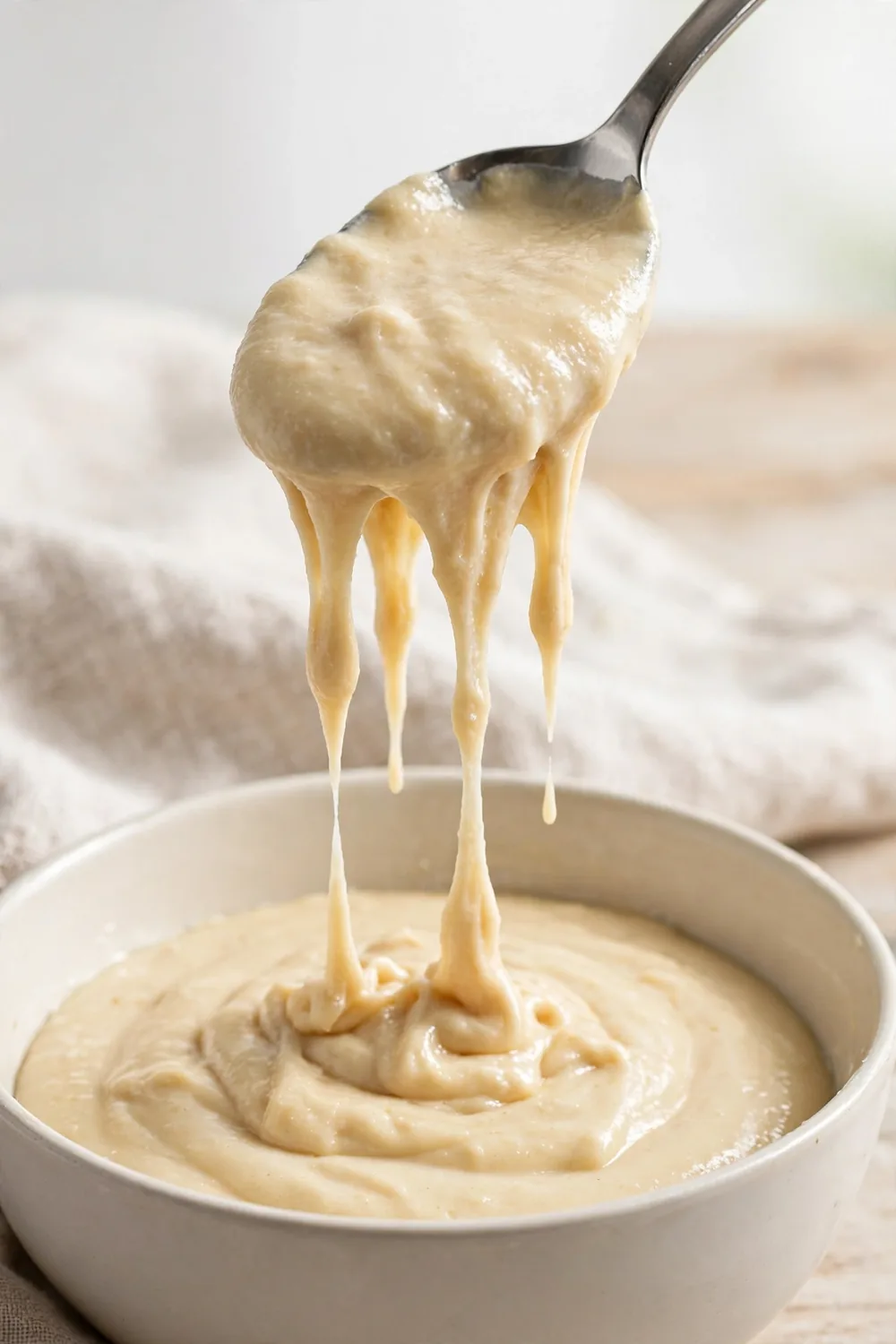
Thick batter holds less free water, so the iron can dry the outside fast. Thin batter spreads too far and steams instead of crisping. The batter should fall slowly from a spoon and hold a soft ribbon. If it runs like milk, add a spoon of flour.
Do not overmix the batter while you adjust it. Stir gently until the flour disappears, and leave a few small lumps. Overmixing builds gluten that makes waffles tough. A thick, gently mixed batter bakes crisp and stays light inside. That gentle mix keeps the crumb light and the shell crisp.
Do Not Open Too Soon
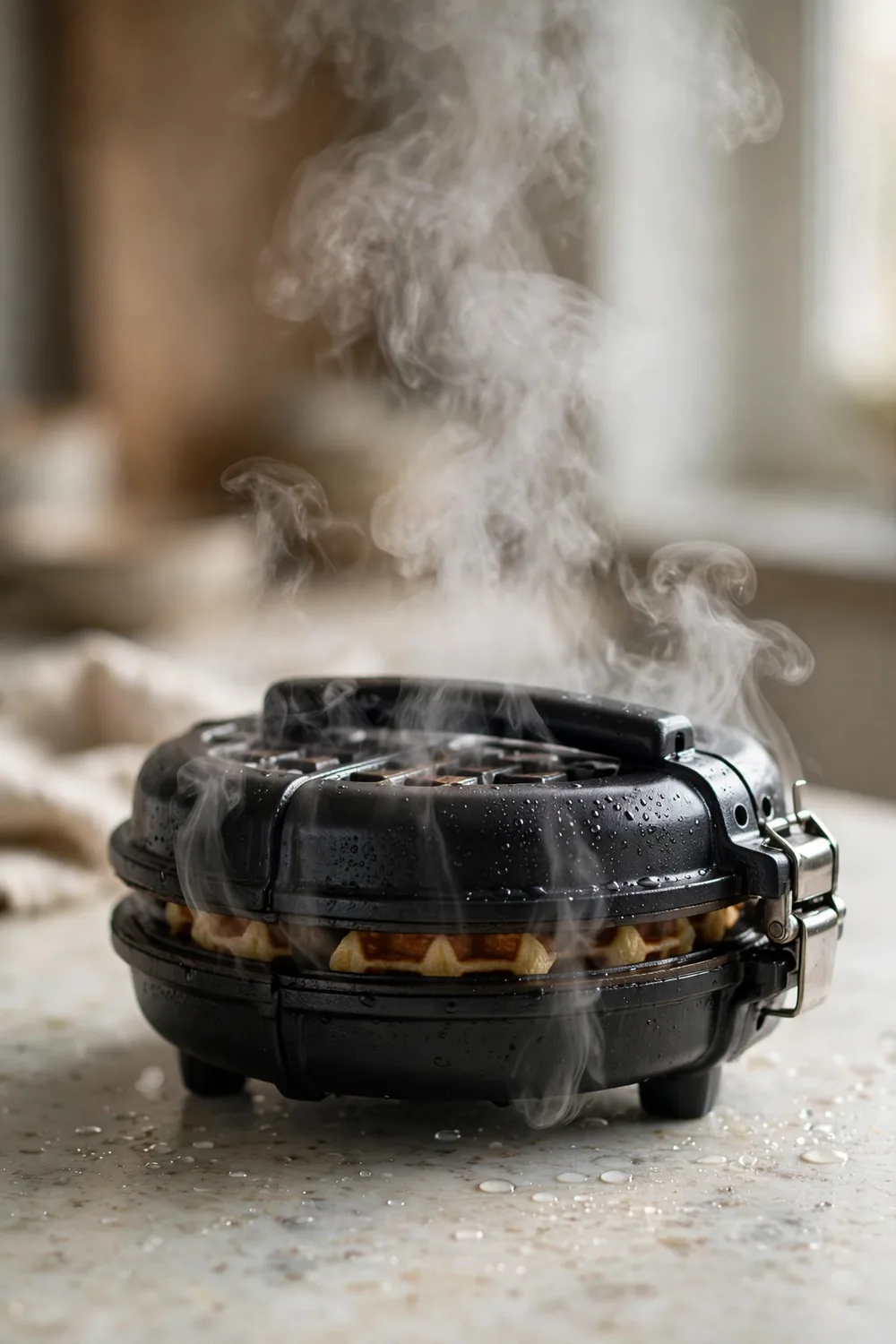
Opening the iron early tears the crust and lets heat escape. The waffle needs steady heat to set its shell and drive off steam. Wait until the steam slows and the iron stops hissing. Most waffles need three to five minutes, so watch the steam, not the clock.
Resist peeking at the first sign of browning. Each lift drops the plate temperature and stretches the bake. When the waffle releases cleanly from the plates, it is ready. Patience here gives a crisp outside and a fully set inside. The crust needs that steady heat to turn golden and firm.
Let Steam Escape
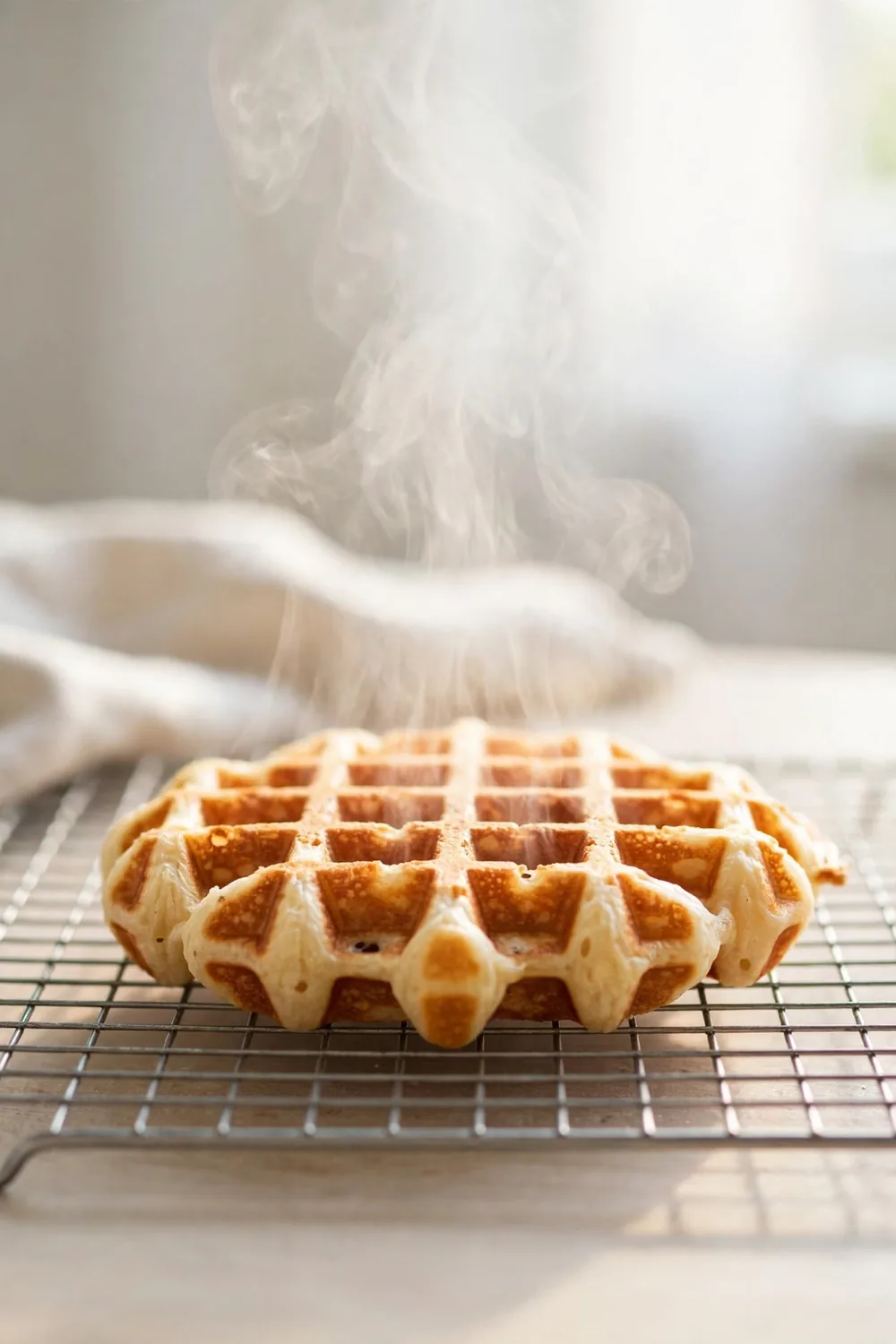
Steam is the enemy of crisp waffles after baking. A waffle fresh from the iron still holds hot steam inside. If you stack it or cover it, that steam softens the crust within minutes. Let each waffle breathe for a minute before it meets a plate.
Hold the waffle upright for a few seconds after lifting it from the iron. That short pause lets steam leave from both sides. Then move it straight to a rack, not a plate. A little airflow keeps the shell crisp while you cook the next batch.
Cool on a Rack
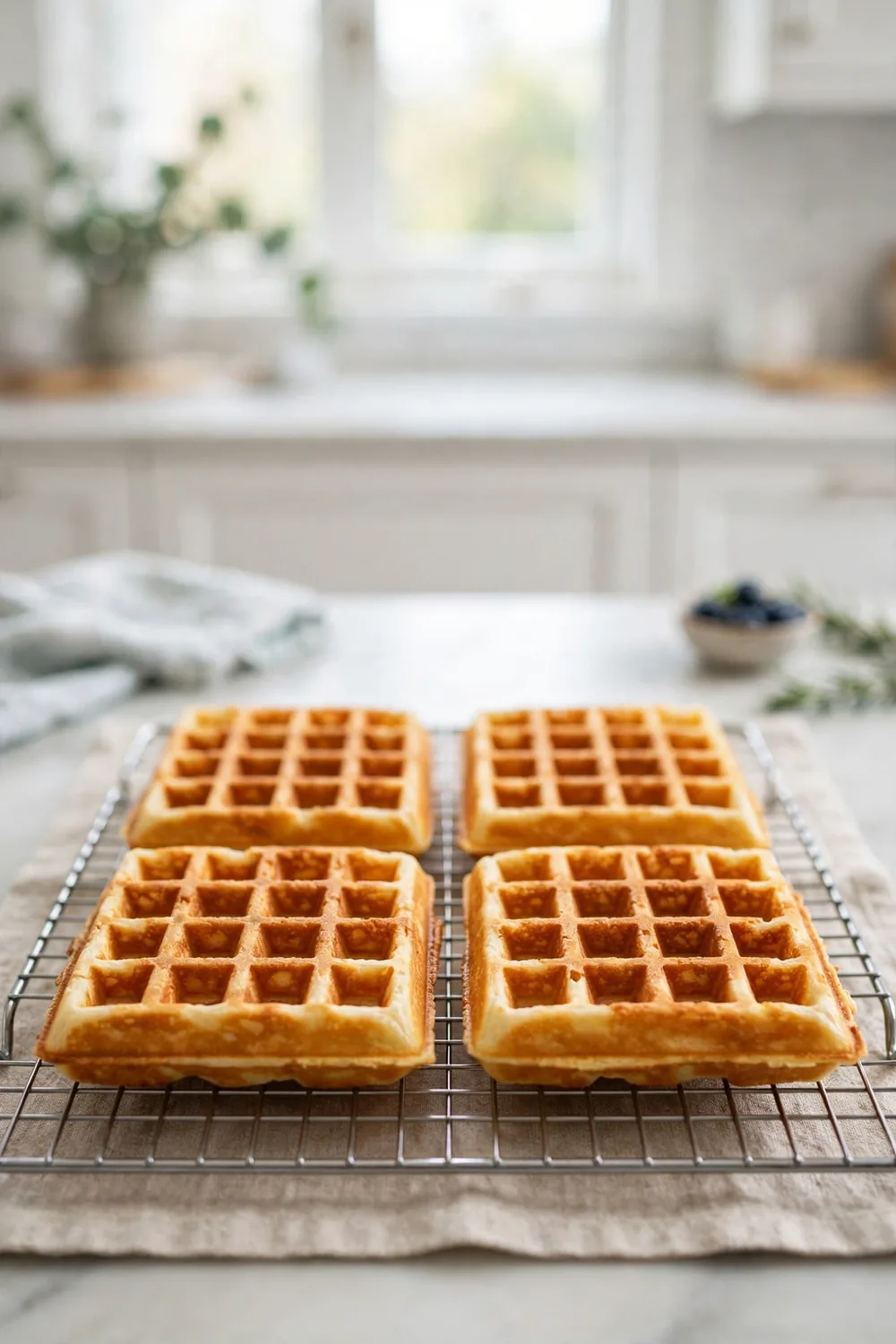
A wire rack is the best friend of crisp waffles. Air moves under and around each waffle, so steam leaves instead of pooling. A plate traps steam underneath, and the bottom turns soft in seconds. Set the rack on the counter near the iron for easy transfers.
Keep the waffles in a single layer, with space between each one. Do not stack them, even for a minute, since stacked waffles steam each other soft. A rack holds the crisp shell while the next batch bakes, and the whole stack stays crisp. Space keeps every waffle crisp.
Serve Right Away

Waffles are at their crispest right after baking. The longer they sit, the more the shell softens as steam and toppings add moisture. Serve each waffle as soon as it cools for a minute on the rack. Fast serving protects the crisp texture you worked for.
If you must hold a batch, keep the waffles on a rack in a warm oven at two hundred degrees. The gentle heat keeps the shell dry without overbaking. Add butter and syrup only at the table, since early toppings soak the crust. Serve fast, and every bite stays crisp.
Clean the Iron Well
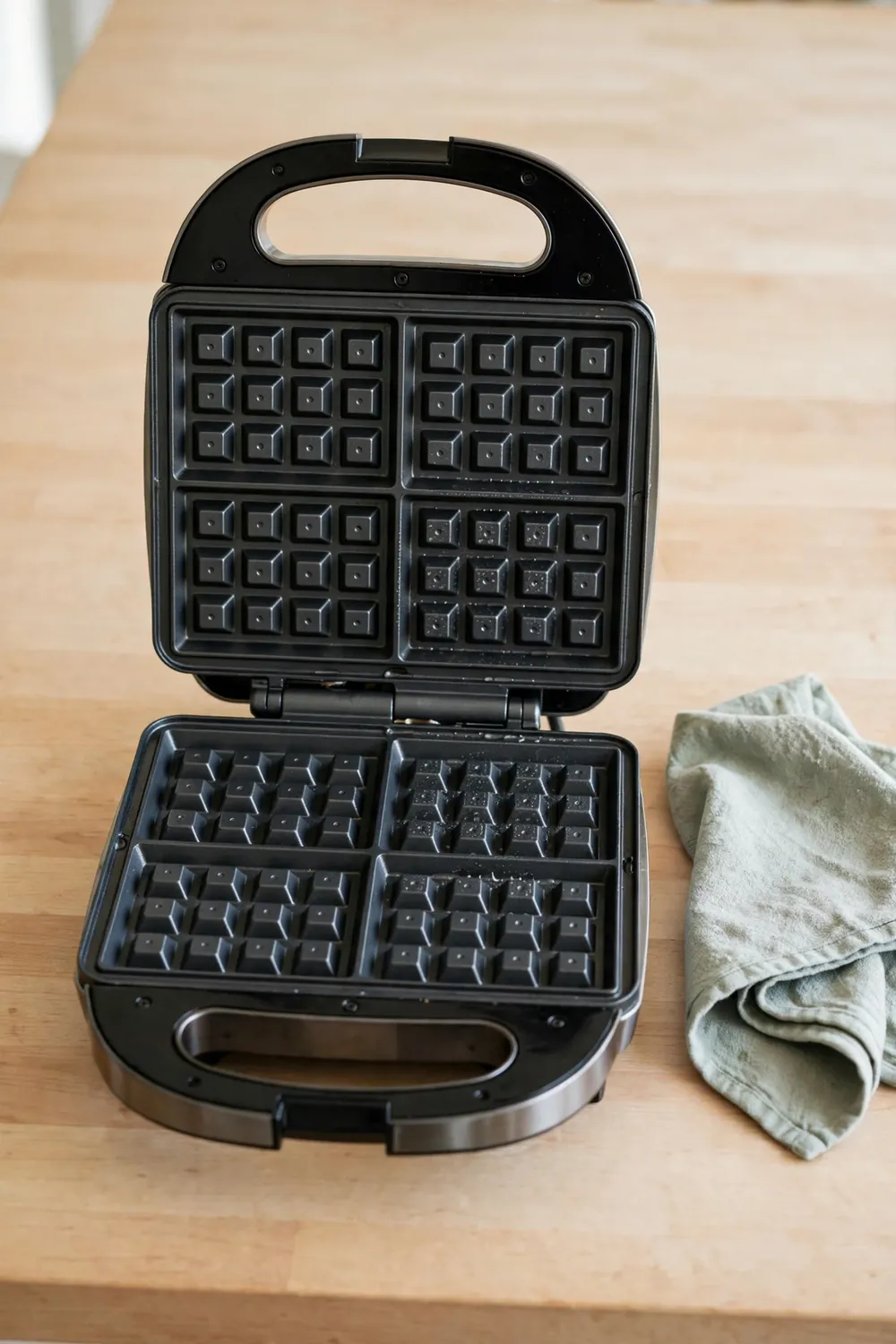
A dirty iron bakes unevenly and sticks, which tears the crust. Old batter and grease build up in the grids and block heat. Wipe the plates with a damp cloth after each use, once the iron cools. A clean iron heats evenly and releases each waffle cleanly.
Brush oil lightly on the plates before the first batch, then skip oiling between batches. Too much oil pools in the grids and fries the batter soft. A thin, even coat keeps the waffles crisp and golden. Clean plates give a clean release every time.
Common Mistakes to Avoid
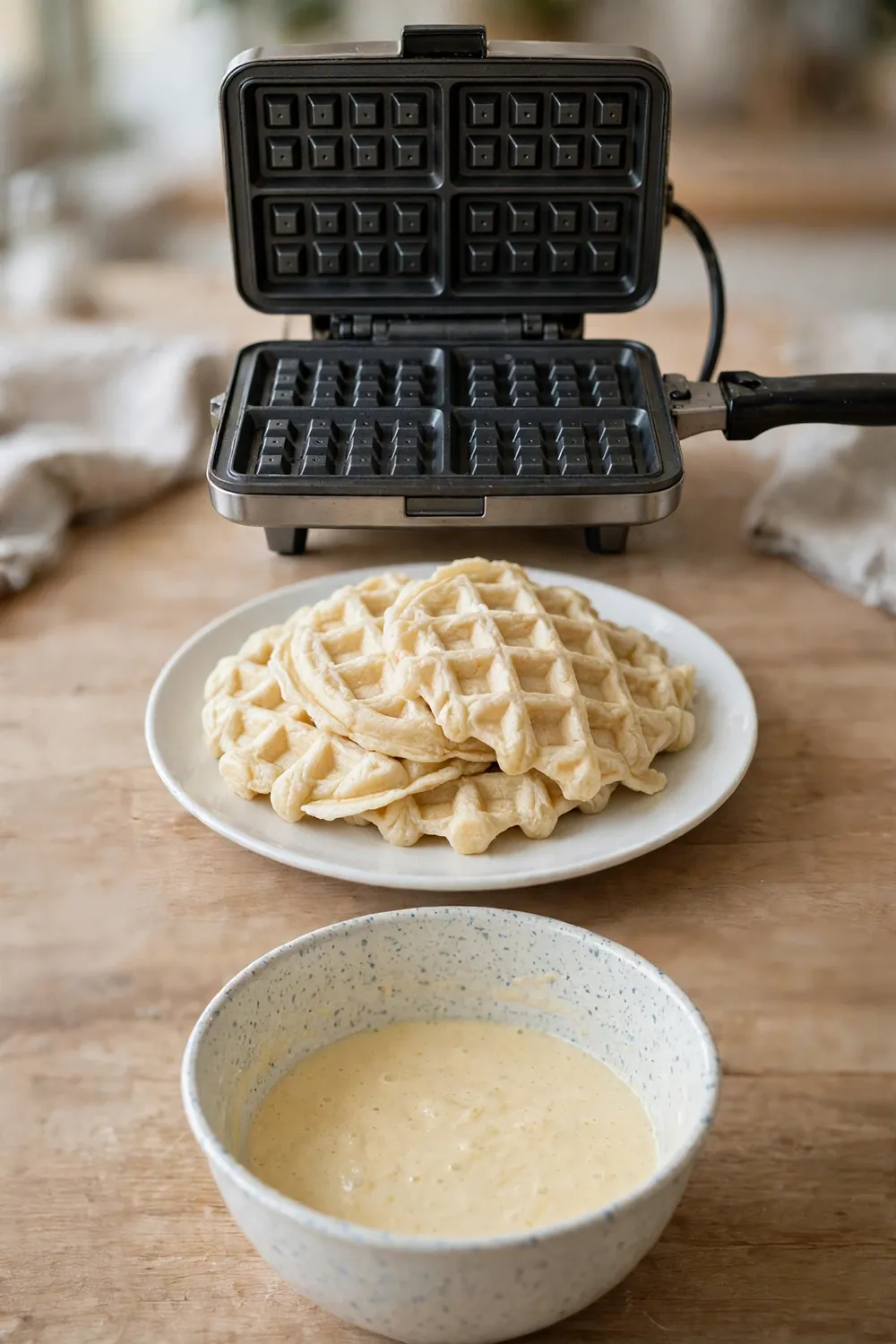
One common mistake is pouring batter into a cool iron, which steams the waffle instead of crisping it. Another is using thin batter with too much milk. A third is stacking hot waffles on a plate, which traps steam. Each habit softens the crust, even when the recipe itself is sound.
A second group of mistakes comes from opening the iron early and covering the finished waffles. Peeking drops the heat and tears the shell, while a cover holds steam in. Fix one habit at a time, starting with a hot iron and a wire rack.
What Crispy Waffles Look Like
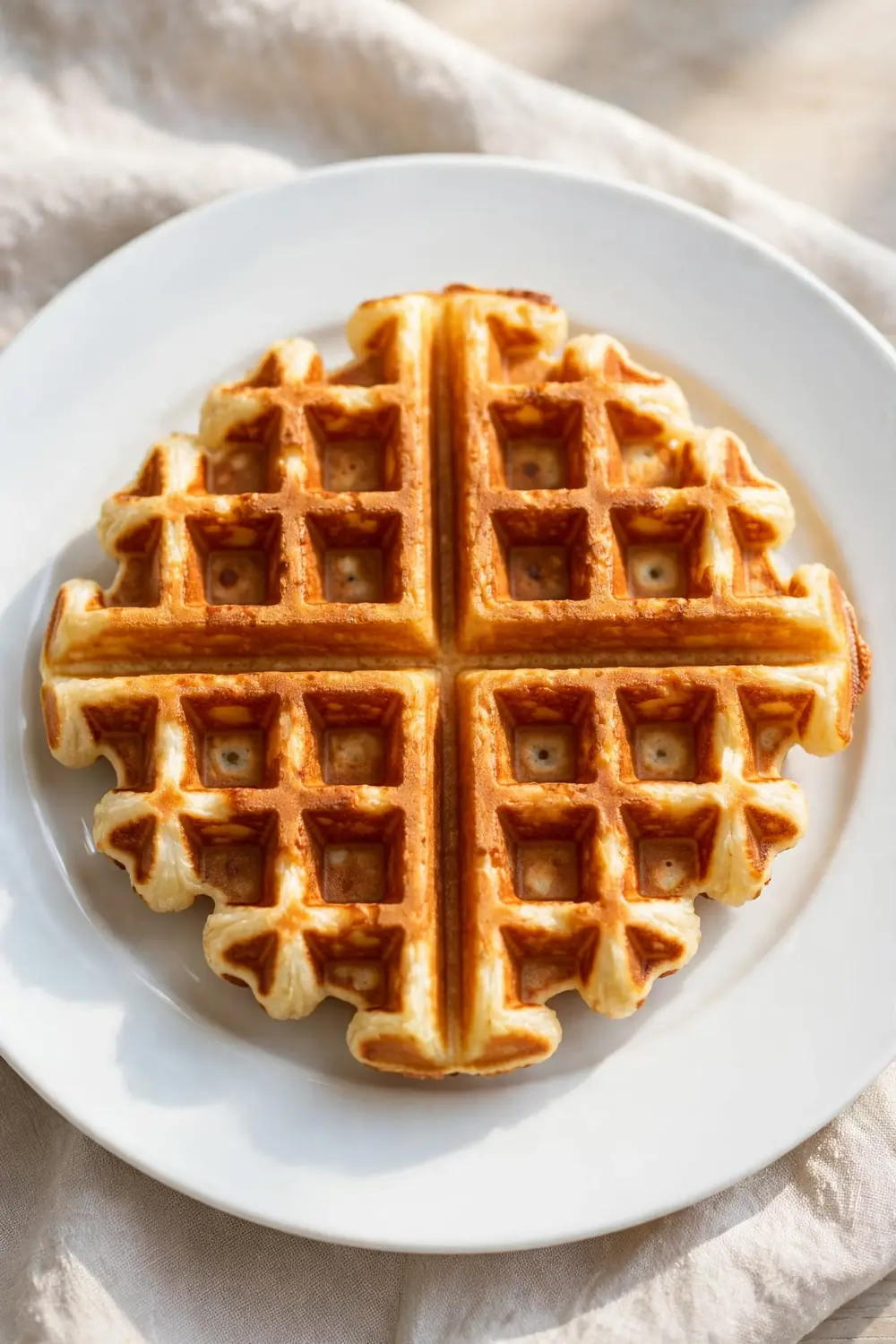
Crisp waffles show deep golden grids and a dry, firm surface. The outside crackles when pressed, and the inside stays tender. The waffle holds its shape when lifted, with no droop at the edges. That firm, golden shell is the sign that heat, batter, and airflow worked together.
Check the bake by tapping the top gently, since it should feel firm and sound crisp. Serve the waffles warm with toppings at the table. When the shell stays crisp and the inside stays soft, you know the fixes worked. Golden color and a firm tap mean the batch is ready.
Conclusion
In short, soggy waffles come from a cool iron, thin batter, early peeking, trapped steam, and stacking on a plate. Fix those steps and each batch turns crisper. Hot iron, thick batter, full bake, rack cooling, and fast serving build a crisp shell.
Start with the simplest fix first. Small changes protect the flavor while the crispness improves. Save this guide on Pinterest for your next batch.
Try the steps on your next batch, and if cinnamon roll dough stays flat, read our guide on cinnamon rolls not rising for a tall, soft rise.





One Comment