Why Is My Pumpkin Bread Gummy? Easy Fix Guide
Gummy pumpkin bread looks moist and promising, then slices into a dense, sticky line down the middle. The loaf is underbaked, overmixed, or cut before it finished setting inside. The good news is that every cause has a simple fix.
Pumpkin puree adds a lot of water to the batter, so this loaf needs more bake time than a plain quick bread. A cool oven, too much liquid, or a pan that is too deep can all leave the center wet while the crust looks done.
This guide covers measuring, mixing, baking, and cooling in order. If cake pops are next on your list, the cake pops guide keeps those treats on their sticks.
Why Loaves Turn Gummy
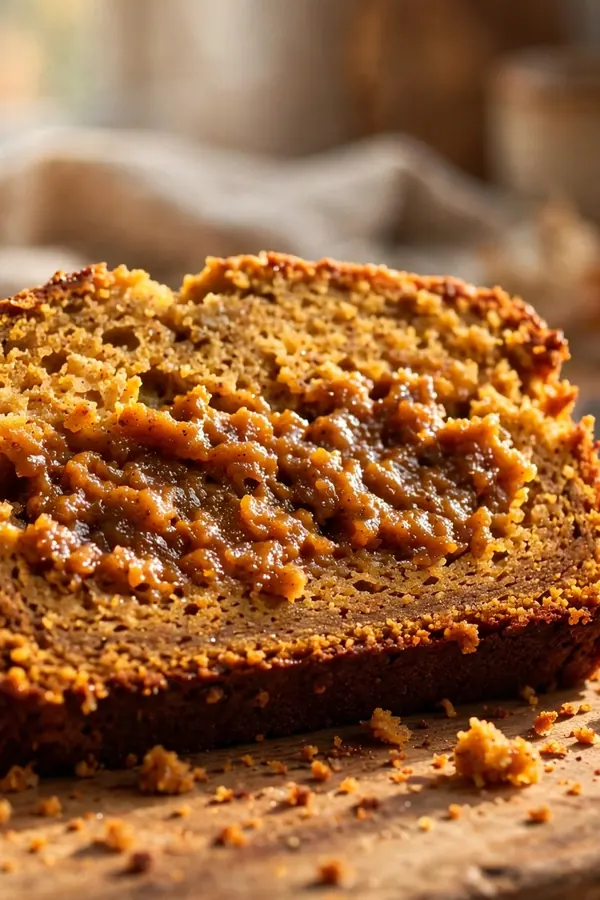
A gummy center means starch never fully set. The crumb stays wet and sticky because the inside of the loaf did not reach the temperature where flour and eggs firm up. Cutting the loaf early makes it worse, since steam gets trapped and the crumb compresses.
Overmixing builds gluten that turns the crumb rubbery instead of tender. Extra pumpkin or oil adds water and fat that slow baking. In my experience, gentle mixing and a full bake solve most gummy loaves. A skewer test at the very center tells the truth, since the edges always bake first.
Measure Flour Right

Flour is the most common measuring mistake in quick breads. A packed cup can add far too much flour, while a light scoop leaves the batter wet. Weighing gives the most reliable result. A kitchen scale costs little and removes the biggest variable from every loaf.
- Weigh flour at 120 grams per cup when you can.
- Spoon flour into the cup and level it if you use cups.
- Measure pumpkin puree exactly, never estimate from the can.
- Check that your baking soda and powder are fresh.
- Keep eggs and puree at room temperature for even mixing.
Mix Batter Lightly

Quick Tip: Stop mixing as soon as the last flour streak disappears. Ten extra strokes can turn a tender loaf tough. A lumpy batter is normal for quick bread and bakes up fine.
Stir the wet and dry ingredients separately first, then combine them with slow folds. Add nuts or chocolate chips at the very end so they do not drag the batter into overmixing. Stop as soon as the last flour streak disappears. A few small lumps bake up tender, while a smooth batter turns tough.
Bake Until Done

Common Mistake: Pulling the loaf when the top looks brown. A dark crust can form while the center is still raw, especially in a deep pan. A toothpick test at the edge will pass while the middle stays wet.
The Fix: Test the very center of the loaf, and trust a thermometer over color. The loaf is done near 200 degrees inside, with a skewer coming out clean or with a few moist crumbs.
Tent the loaf with foil if the top browns early. The foil slows crust color while the center keeps baking, so the whole loaf finishes at the same time. Test the very center with a skewer or thermometer. The loaf is done near 200 degrees, with the skewer coming out clean.
Check With Thermometer

What You Need:
- Kitchen scale: Weighing flour and puree removes the biggest variable.
- Instant read thermometer: The center should reach about 200 degrees.
- Long skewer: A skewer reaches deeper than a toothpick for a true test.
- Light metal loaf pan: A standard 9 by 5 pan bakes more evenly than glass.
- Wire rack: Airflow lets the loaf cool without trapping steam.
These five tools cover measuring, baking, and cooling. With them, you can repeat a good loaf instead of guessing each time. A scale removes measuring guesswork, and a thermometer tells the truth about doneness. A long skewer reaches the center, and a wire rack lets steam escape so the crumb stays light.
Cool Loaves Fully

Before: The batter was beaten smooth, poured into a deep glass pan, and pulled when the top turned dark. The slices were sticky in the middle and stuck to the knife.
After: The batter was folded gently, baked in a metal pan to 200 degrees, and cooled fully on a rack. The slices were moist, tender, and clean.
Nothing in the recipe changed except method. Accurate measuring, gentle mixing, and a full bake turn the same ingredients into a much better loaf. Cool the loaf fully on a rack before slicing, since a warm crumb compresses under the knife. A full cool down gives clean slices with a tender, even texture.
Fix Wet Spots
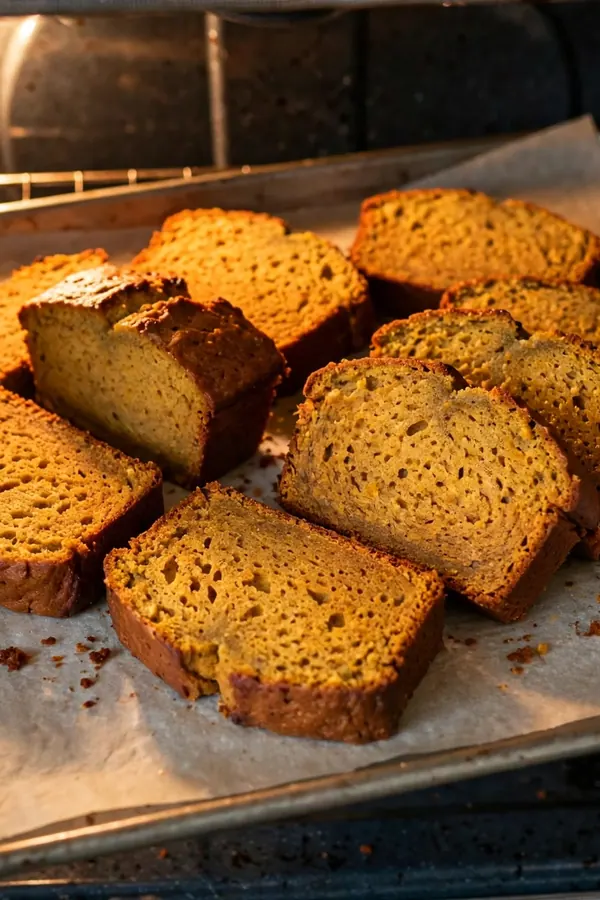
Do This:
- Measure flour by weight when possible.
- Fold the batter only until combined.
- Bake to 200 degrees in the center.
- Cool the loaf fully before slicing.
Avoid This:
- Do not beat the batter until smooth.
- Do not trust crust color alone.
- Do not slice a warm loaf.
- Do not add extra puree for moisture.
Pumpkin already brings plenty of moisture. More puree only adds water that the bake must drive off, so keep the amount exactly as written. Measure the puree by weight when you can, and drain any watery liquid from the can. A thick, consistent batter bakes evenly and gives a tender crumb that slices cleanly.
Rescue Dense Slices
Time Needed: About 15 minutes per rescue.
Difficulty: Easy, no special tools.
Cost: Pantry staples only.
Best For: Dense or underbaked slices.
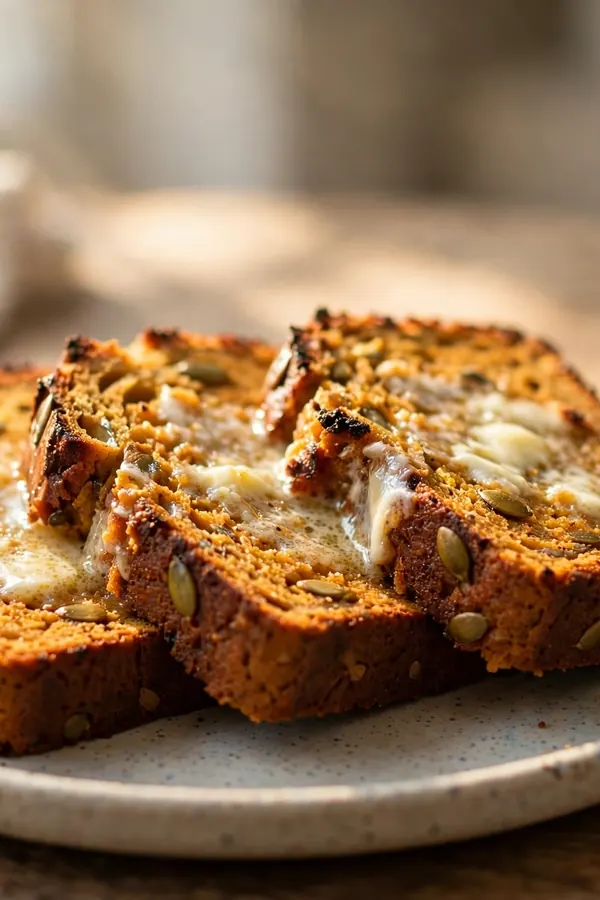
Toast thick slices in a dry skillet until the edges turn crisp, then top them with whipped cream or a scoop of vanilla ice cream. For dense slices, cube the loaf for bread pudding or crumble it over yogurt. A crisp edge and a cool topping turn a heavy slice into a dessert worth serving.
Adjust For Moisture

If the loaf is already baked and still wet inside, slice it and return the slices to a low oven. Ten minutes at 300 degrees dries the crumb without burning the crust. Let the slices cool on a rack before serving. Serve the dried slices with butter or cream cheese for extra richness.
For a loaf that is only slightly underdone, wrap it in foil and bake ten more minutes. The foil traps gentle heat and finishes the center without darkening the top. Check again with a skewer before cooling. Let the foil wrapped loaf rest ten minutes before slicing.
Store Loaves Right

A cooled loaf keeps well when it is wrapped tight and kept away from air. Room temperature suits short storage, while the fridge and freezer cover longer stretches. Slice only what you plan to eat, since cut faces dry out once sliced. These habits keep every slice moist and fresh.
- Cool the loaf fully on a rack before wrapping.
- Wrap tightly in plastic wrap, then add a layer of foil.
- Keep at room temperature for up to three days.
- Freeze extra slices in single portions for up to three months.
Plan Better Bakes

Quick Tip: Write down your pan size, bake time, and oven setting after every bake. Those notes make the next loaf predictable. A short log beats memory every time.
Pick a light metal pan for even heat, and set out eggs and puree early so they mix smoothly. Weigh the flour, check the leavening, and leave time for a full cool before slicing. A calm plan with no rush gives the loaf its best chance to bake through.
Conclusion
Gummy pumpkin bread is a method problem, not a recipe failure. Measure the flour, fold the batter lightly, bake to 200 degrees, and cool the loaf fully before slicing. Those four habits give a moist, tender crumb every time. For another holiday bake rescue, the pumpkin pie guide shows how gentle heat keeps a custard pie smooth.
Store the cooled loaf wrapped tightly and slice only what you serve. Resting overnight firms the crumb and deepens the spice flavor. A careful bake and a full cool down give a tender loaf that stays moist for days.