Why Is My Banana Bread Burnt On Top But Raw Inside? Easy Fix Guide
If your raw banana bread stays wet in the middle, you are not alone. A deep pan, too much banana, and a hot oven all leave the center underbaked. The good news is that a few careful steps fix it.
This guide covers pan choice, batter, oven heat, and testing. You will learn why the center stays raw and how to bake it through. Every fix uses basic tools and pantry staples.
Once your loaves bake through, the next dough may need the same care, so keep the cookie dough guide handy for workable, easy to shape dough every time.
Why Banana Bread Stays Raw
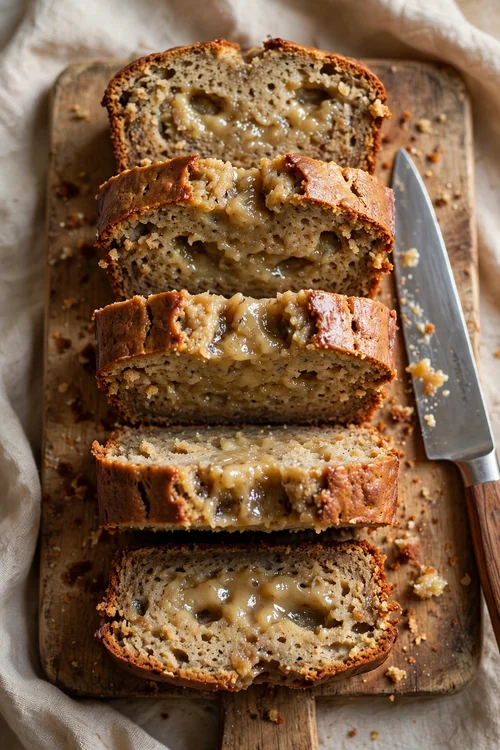
Most wet centers come from too much batter in a deep pan. The outside sets fast while the inside never catches up, and the loaf looks done long before it is. Extra banana makes it worse, since it adds moisture the batter cannot bake out. Measuring the mash keeps the batter balanced.
A hot oven makes it worse too, since the crust browns early and hides the wet middle. The fix is a lighter batter, a moderate oven, and a real test before pulling. A loaf that tests clean stays moist without staying wet inside.
Test Before You Pull
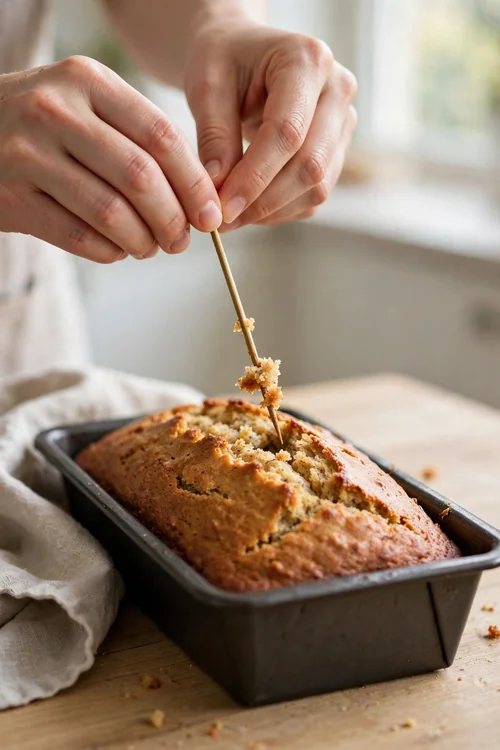
Testing is the only way to know the center is done, since color lies. A brown crust can hide a wet middle, and a loaf that looks perfect can still be raw inside. Test early and trust the skewer. Follow these steps for a loaf that is baked through.
- Start testing 10 minutes before the recipe time ends.
- Insert a skewer into the center of the loaf.
- Look for a few moist crumbs, not wet batter.
- If wet, bake 10 more minutes and test again.
Tent With Foil

Quick Tip: Tent the loaf with foil once the top is golden. The foil stops the crust from burning while the center keeps baking.
Foil tenting saves many loaves. A dark crust is not a done loaf, and without a tent the top burns before the middle sets. Lay the foil loosely so steam escapes, and keep baking until the skewer tests clean. The crust will stay golden, and the center will finish baking through.
Fix an Underbaked Loaf
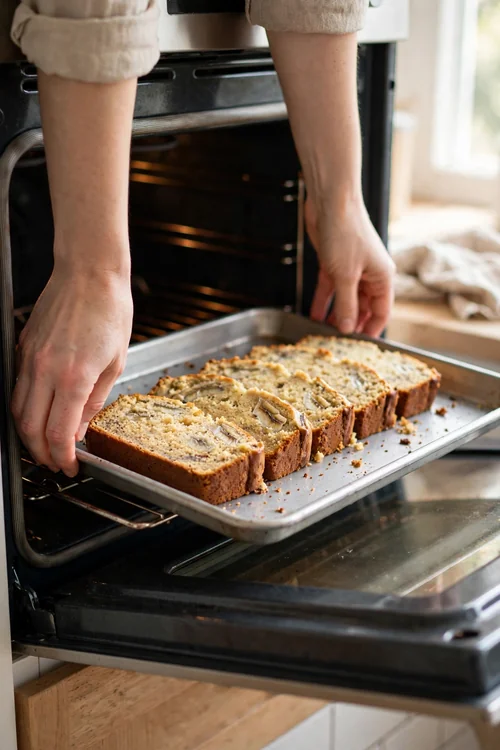
Common Mistake: Many cooks pull the loaf as soon as the top looks brown. A brown top can hide a raw center, and the loaf collapses as it cools.
The Fix: Return it to the oven. A low oven and a few more minutes will finish the center without drying the loaf.
Rescue works best if the loaf is still warm. Return the whole loaf to a 300 degree oven for 10 to 15 minutes, tented with foil. If the loaf is already sliced, lay the slices flat and warm them until firm. The center will set, and the loaf will still taste moist.
Measure Bananas Right

What You Need:
- Very ripe bananas: brown and soft, for the best flavor.
- A measuring cup: keeps the banana amount exact.
- A light metal pan: bakes evenly without overbrowning.
- A skewer: tests the center without cutting the loaf.
- Foil: tents the loaf so the top does not burn.
Banana amount matters more than most recipes admit. One cup of mashed banana is enough for a standard loaf, and more will leave the center wet. Measure the mash, and do not add an extra banana for luck. Ripe bananas bring flavor, but too many bring water the batter cannot bake out.
Before Raw After Baked

Before: The center is wet and gummy. The loaf sinks as it cools, and each slice feels heavy.
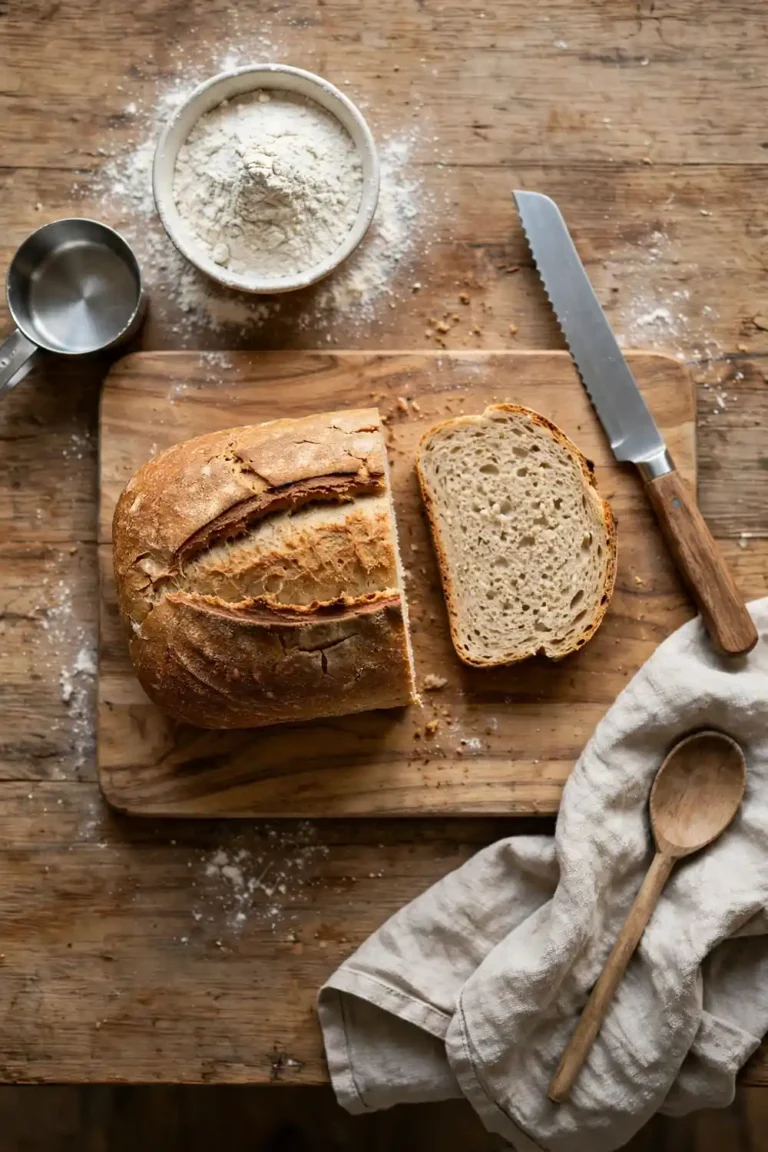
After: The crumb is even and moist. The loaf holds its shape, and each slice feels light.
The change comes from measured bananas, foil tenting, and real testing, not from a new recipe. Measure the mash, tent the top, and test with a skewer before pulling. Those three habits turn a wet loaf into one that slices cleanly. Keep the routine steady, and every loaf will bake through to the center.
Do and Don’t Basics
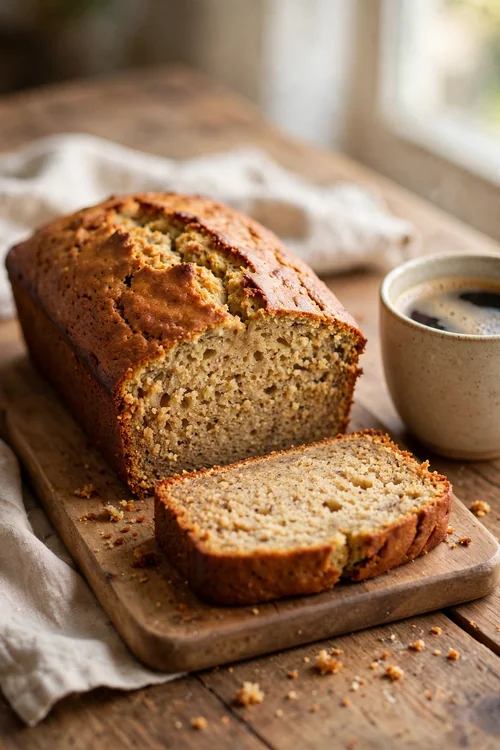
Do This:
- Measure one cup of mashed banana.
- Use a light metal pan.
- Tent with foil once golden.
- Test with a skewer before pulling.
Avoid This:
- Do not add extra bananas.
- Do not use a deep glass pan.
- Do not trust crust color alone.
- Do not open the oven every few minutes.
These habits give a loaf that bakes through every time. Measured fruit, a moderate oven, and a real test are the whole secret. Once the routine is set, fully baked loaves become the normal result at your table. Repeat the routine, and moist loaves follow every time. Keep the routine steady for moist loaves.
Quick Loaf Facts

Time Needed: 60 minutes baking plus 20 minutes cooling.
Difficulty: Easy, with basic tools.
Best For: Breakfast, snacks, and gifting.
Pro Tip: Cool in the pan for 10 minutes only.
A loaf left in the pan steams and turns soggy at the bottom. Cool it in the pan for 10 minutes, then lift it out to finish on a rack. The crust will stay firm, and the bottom will not go wet. A wire rack lets air flow under the loaf, and the crumb sets.
Cool Loaf Completely

Cooling fully is part of baking, and rushing it ruins a good loaf. A loaf cut while hot will look wet inside even when it is done, since the crumb is still setting. Let the loaf cool for at least 30 minutes before slicing, and the crumb will firm up.
Cool on a rack so air flows under the loaf and around the sides. A loaf cooled in the pan stays damp at the bottom, and a loaf cooled on a plate does the same. Patience with cooling gives clean slices and a firm, moist crumb.
Rescue a Soggy Center

A soggy center can still be saved with a second bake, so do not throw the loaf away. Slice the loaf, warm the slices, and let the heat finish what the oven started. The slices will firm up. Follow these steps to rescue a wet loaf and serve it warm.
- Let the loaf cool fully, then slice it.
- Lay the slices on a tray in one layer.
- Bake at 300 degrees for 10 minutes.
- Flip once and bake 5 minutes more.
- Serve warm with butter.
Slice and Serve
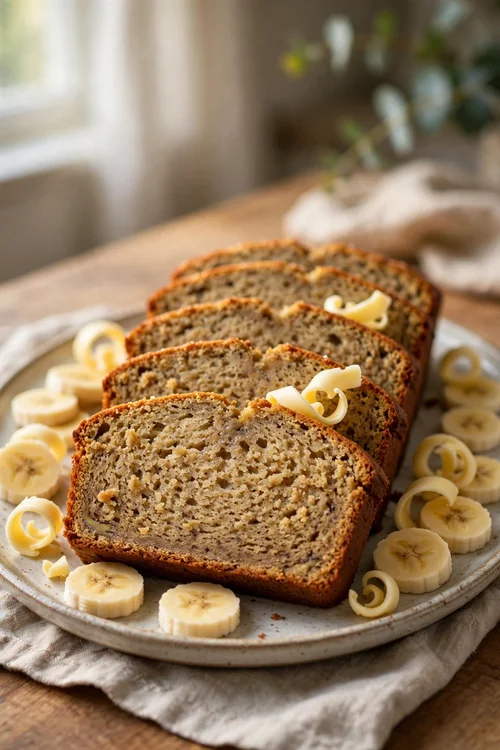
Quick Tip: Use a serrated knife and slice with light sawing strokes. A straight push crushes the crumb, while a gentle saw keeps the slices clean.
Serving matters for a loaf that took an hour to bake. Slice evenly, and serve the bread slightly warm with butter. Keep the rest covered so it stays moist through the meal. The same loaf will taste far better sliced cleanly than hacked apart while hot. Neat slices show off the crumb.
Conclusion
Fixing raw banana bread comes down to measured bananas, a moderate oven, and skewer testing. Those three habits give a fully baked, moist loaf. Once they are routine, good loaves take no extra effort.
Take the fixes one at a time, and your next batch will show a clear improvement. Write down what worked, so the fix gets faster every time you cook.
Tent the top, test the center, and cool before slicing. For another bake that turns stale, see the stale cookies guide, then slice your loaf while it is still fresh.