Why Is My Custard Watery And Not Setting? Easy Fix Guide
A bowl of runny custard disappoints fast. Instead of a smooth, spoonable cream, you get a thin sauce that never sets. The fix usually comes down to heat, eggs, or patience.
This guide walks through each fix in order, from mixing to cooking to chilling. You need no special tools, just a little care and pantry staples. Most thin custards set well with one or two small changes. A gentle hand beats high heat every time. Small fixes make a big difference here. For a panna cotta that turns rubbery instead, see this panna cotta guide for a soft, silky rescue with gentle heat.
Why Custard Stays Runny

Custard stays runny for three main reasons: too little heat, too few eggs, and rushing the cook. Gentle heat lets eggs thicken slowly, while a quick boil curdles them. Too few yolks leave nothing to set the cream.
The good news is that each cause has a simple fix. Once you see which one hit your pot, you can correct it before serving. Think of custard as gentle work, not a race. A few small changes make a big difference here. Your patience shows in every silky spoonful at the table.
Use Enough Yolks

Egg yolks are what set a custard, so the count matters. A thin custard often has too much cream for too few yolks. Adding one extra yolk thickens the pot without changing the flavor much. Trust the yolk count more than the clock.
- Use the yolk count the recipe calls for, never fewer.
- Separate eggs cleanly so no white thins the mix.
- Whisk yolks and sugar until pale before adding cream.
- Add one extra yolk if the custard stayed thin last time.
Low Heat Always
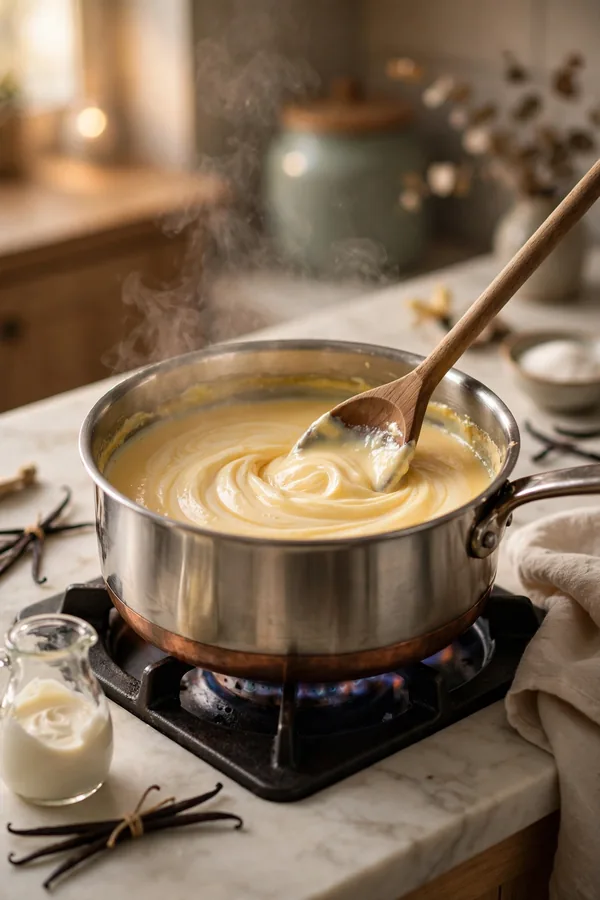
Quick Tip: Keep the burner on low from start to finish. Custard should never boil, since boiling curdles the eggs into lumps. A gentle warmth thickens the cream without breaking it.
Stir slowly and constantly, reaching the pot corners where eggs catch first. If the custard starts to bubble, pull the pot off the heat at once. In my experience, low heat saves more custards than any ingredient swap. Patience here is the whole secret. Trust the low heat.
Temper the Eggs

Common Mistake: Many cooks pour hot cream straight into cold eggs, which scrambles them at once. The eggs curdle into lumps, and the custard never thickens smoothly.
The Fix: Whisk a ladle of warm cream into the yolks first, then pour the warmed yolks back into the pot. Tempering raises the egg heat gently so nothing curdles.
Pour slowly and whisk the whole time so the eggs warm evenly. A rushed pour cooks the eggs in streaks that never blend back. Take your time and the custard rewards you. A calm pace beats a fast pour every single time. Trust the slow pour.
Watch for Nappe

What You Need:
- Heavy pot: spreads heat evenly and stops scorching.
- Wooden spoon: shows the nappe coat clearly.
- Thermometer: 80 degrees means the custard is set.
- Fine strainer: catches any small curdled bits.
- Ice bath: stops the cooking the moment it sets.
Custard is done when it coats the back of a spoon, and a finger line holds clean. This nappe test beats any timer. Pull the pot at once, since the custard keeps thickening off the heat. Watch for the nappe coat every time. Trust the spoon test here.
Strain and Chill

Before: The custard went straight to the fridge in the hot pot, kept cooking, and turned lumpy. The surface skinned over, and the texture stayed uneven.
After: The same custard, strained into a cool bowl over ice, set silky and smooth. The texture stayed even, the flavor stayed clean, and serving felt easy.
Strain the custard the moment it coats the spoon. Straining catches any bits before they spread. Chill over ice, stirring gently, so the custard sets evenly without a skin. Straining saves the texture every time. Work quickly, since custard waits for no one. Trust the strainer here.
Fix a Thin Pot

Do This:
- Return the pot to low heat and stir gently.
- Whisk a teaspoon of cornstarch with cold milk first.
- Stir the slurry in and cook one minute more.
- Strain the custard before chilling it.
Avoid This:
- Do not boil the custard to thicken it.
- Do not add raw cornstarch straight to the pot.
- Do not add more eggs to a hot custard.
- Do not stop stirring while the pot is on heat.
A thin pot is rarely a lost pot. Low heat, steady stirring, and a small slurry fix most custards in minutes. Stay calm, work slowly, and the cream usually comes together. Rescue beats restart almost every single time. Trust the rescue and keep stirring. Stay calm.
Custard Types Matter

Time Needed: About 30 minutes, plus chilling time.
Difficulty: Beginner friendly with gentle heat.
Cost: Uses eggs, cream, and sugar you already own.
Best For: Desserts, trifles, and poured sauces.
Stirred custard sets on the stove, while baked custard sets in the oven. Baked custard needs a water bath to cook gently. Match the method to the dessert and the custard stays smooth. Read the recipe method before you start cooking. Small choices matter always.
Cool It Right
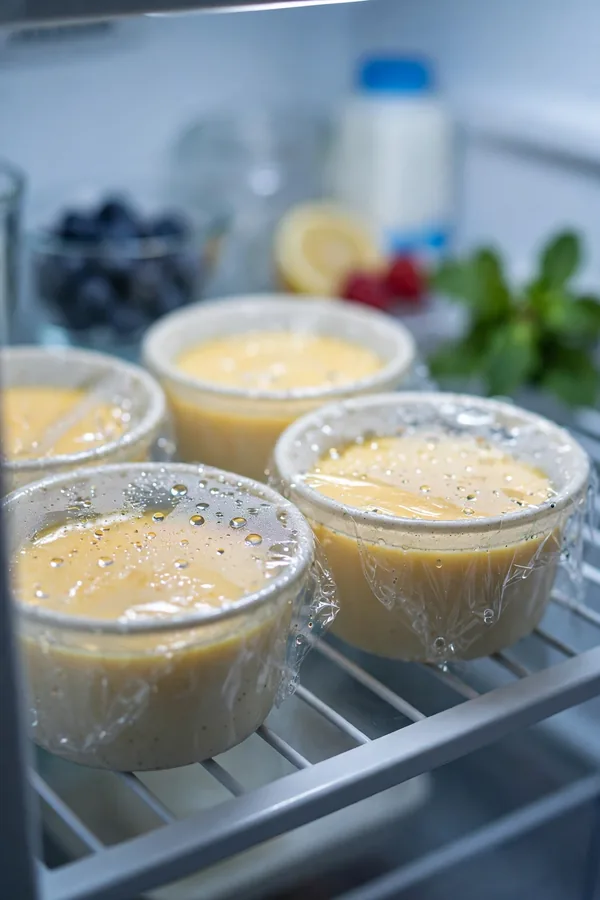
Cooling matters more than most cooks expect. A custard left in a hot pot keeps cooking and turns lumpy. A custard chilled fast stays silky and even.
Pour the custard into a cool bowl and press wrap right onto the surface. The wrap stops a skin from forming while it chills. Cool fully before serving, since a warm custard still sets as it rests. Patience here pays off in every smooth spoonful. Wait for full chill before serving. Your patience shows in every smooth spoonful. Serve it with pride today.
Rescue Runny Leftovers

Already chilled a thin custard? Do not throw it out. A gentle reheat with a slurry can save most pots, and a few tricks make them worth serving. The rescue takes minutes and no special tools. Start with the simplest fix first.
- Warm the custard slowly on low, stirring often.
- Whisk a teaspoon of cornstarch with cold milk.
- Stir the slurry in and cook one minute more.
- Strain, chill, and serve at once.
Next Custard Checklist

Quick Tip: Keep this checklist near the stove for your next custard. A glance before cooking saves a rescue later. Soon the habits feel automatic, and every pot lands silky and set.
Great custard comes from habits, not luck. Use enough yolks, keep the heat low, temper slowly, and chill fast. Check the nappe early, adjust the next pot, and enjoy a custard that stays silky to the last spoonful. That is a pot worth repeating. Your stove will thank you.
Conclusion
Silky custard comes from enough yolks, gentle heat, and a careful temper before cooking. Fix those three habits and runny custard becomes a rare mishap instead of the usual result. Start with a good yolk count, stir on low, and strain before chilling. Your next pot should coat the spoon, set smoothly, and taste rich to the last spoonful. If another dish puzzles you, read this cream puffs guide for tall puff fixes with steady heat. Keep this guide handy and cook with confidence every single time at the table. Serve proudly.